
A complete guide to a PhD in sustainability management

Key Takeaways
Embarking on a doctoral journey requires balancing rigorous academic theory with practical, real-world application in the evolving field of sustainability. Here are the central components of this advanced degree pathway.
- Doctoral programs demand a clear research focus on environmental, social, and governance issues.
- Admissions committees seek candidates with strong past academic performance and a refined research proposal.
- Curriculum structures blend quantitative data modeling with qualitative policy analysis to address global challenges.
- Financial planning should leverage internal fellowships and external grants for long-term project support.
- Graduates find versatile career opportunities across academic, private sector, and policy-making organizations.
Understanding the scope of a PhD in sustainability management
The exploration of a phd in sustainability management involves rigorous academic inquiry into how organizations navigate environmental responsibilities alongside economic growth. Candidates typically investigate the intersection of business strategy and social welfare, building deep expertise in systemic change. This academic path serves individuals aiming to lead research or drive structural shifts within large-scale enterprises.
Defining sustainability management research
Research in this domain focuses on creating frameworks that allow organizations to measure and improve their ESG impacts. Scholars gather and interpret data to inform better decision-making processes for businesses facing complex regulatory burdens. This research contributes foundational knowledge used by platforms like Breathe ESG to streamline carbon tracking, improve audit readiness, and simplify compliance management.
Core differences between academic and professional doctorates
Academic doctorates typically prioritize the creation of new theory, while professional doctorates emphasize the application of existing research to specific organizational problems. Students in research-heavy PhD tracks spend their time developing novel methodologies, whereas professional candidates address immediate practitioner needs. This distinction governs everything from the timeline of studies to the nature of the final dissertation.
Interdisciplinary approaches in sustainability studies
Sustainability is inherently broad, requiring researchers to synthesize insights from fields as diverse as economics, environmental science, and social psychology. This interdisciplinary nature allows for a more holistic view of systemic risks and opportunities. Scholars who approach Sustainability at ASU understand that solving climate challenges requires this multi-faceted perspective, often blending scientific data with public policy strategy.
Admission requirements and application processes

The application process for doctoral programs is competitive, requiring a demonstration of both intellectual capability and professional dedication. Committees review past academic records alongside a clear articulation of research goals. Successful applicants effectively communicate why their specific interests align with their chosen department's expertise.
Academic prerequisites and research proposal expectations
Applicants almost always need a strong background in a relevant field like business, engineering, or environmental sciences. A high-quality research proposal acts as the cornerstone of the application, outlining a specific gap in current knowledge that the candidate intends to fill. The following table summarizes the typical components required for a competitive submission.
This structured approach to documentation ensures that the candidate has the research acumen necessary for long-term investigation. It displays a commitment to scholarly rigor that universities look for during the selection period.
Selecting the right supervisor or research group
Choosing the correct mentor is perhaps the most important decision a doctoral candidate makes. Look for scholars whose current research trajectory aligns with your own specific interests in ESG or environmental policy. A good supervisor provides both technical guidance and access to professional networks that are vital for future career advancement.
Standardized testing versus professional experience
While GRE or GMAT scores may be requested by some institutions, professional experience often carries equal weight in management-focused programs. Candidates from the workforce bring unique insights into organizational challenges that traditional academic applicants might lack. Programs like those at Capitol Technology University recognize that applying science to reduce resource demand is a task perfectly suited for those with a mix of technical knowledge and industry context.
Tips for crafting a competitive statement of purpose
Your statement should balance personal motivation with a clear academic focus. Avoid generic introductions; instead, explain the specific research questions your work will address and why your chosen university is the right place to explore them. Ensure your writing reflects an understanding of the current Environment and Sustainability landscape, demonstrating that you have identified gaps where your contributions will matter.
Navigating core curriculum and research methodology
Doctoral students follow a structured path designed to sharpen their analytical and research skills. Early years typically involve coursework, while later years focus intensively on dissertation research. This period is for building the expertise needed to navigate Microsoft Sustainability Manager features or similar professional tools for data-driven disclosures.
Quantitative methods for environmental impact assessment
Quantitative analysis forms the backbone of empirical research in sustainability management. Students learn to handle large datasets, perform regression analyses, and build models that project environmental outcomes under various policy scenarios. Mastery of these methods is essential for anyone who intends to work with the complex, multi-source data required by Breathe ESG during enterprise-grade carbon reporting.
Qualitative approaches to policy research
Qualitative research fills the conceptual gaps that numbers alone cannot describe. Through interviews, case studies, and observational fieldwork, researchers uncover the social and political dynamics that drive policy adoption. These insights are essential for understanding how corporate sustainability culture forms and survives within diverse organizational environments.
Integrating business strategy with sustainability goals
Integrating ESG into core business strategy is now a prerequisite for long-term competitiveness. Students analyze how companies transition to circular economic models and align their procurement strategies with sustainable long-term targets. This approach is frequently studied in the Sustainability Management PhD at the University of Waterloo, where business strategies must be both ethical and profitable to remain viable.
Managing long-term research projects
Dissertation work requires significant self-discipline and the ability to maintain momentum across several years. Students must manage their own timelines, coordinate data collection, and stay organized amid shifting research constraints. Here are common strategies that successful doctoral students use to keep their progress steady:
- Establish clear monthly milestones with a faculty mentor.
- Delegate data entry to assistants when budget allows.
-Maintain a digital repository of all citations and primary sources. - Schedule periods for uninterrupted writing and reflection.
Following these steps ensures that even the most complex research questions remain manageable over the lifetime of a student's project.
Funding opportunities and financial support
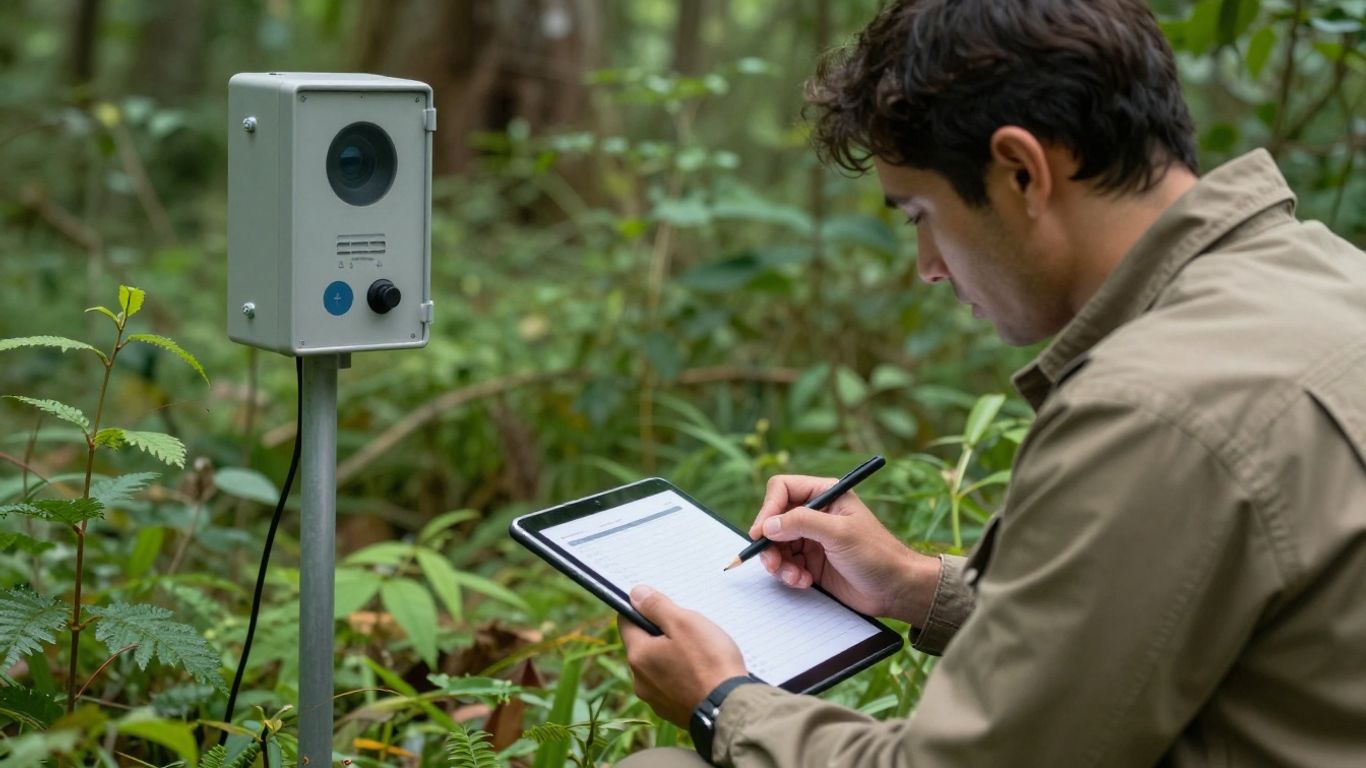
Financing a doctoral program is a top concern for many prospective students. Universities and external organizations often offer fellowships, grants, and assistantships that can mitigate the cost of tuition and living expenses. Because the Breathe ESG platform highlights the importance of real-time resource management, prospective doctoral students might similarly look for ways to manage their own financial resources efficiently.
Grant writing and identifying external research funding
Learning to write winning grant proposals is an essential career skill for an academic researcher. Identifying relevant funding sources—such as government research councils or industry foundations—requires significant time and careful research. Applicants who successfully secure external funding often find more freedom in their research focus compared to those dependent solely on department-assigned duties.
University fellowships and teaching assistantships
Teaching assistantships offer a common route to funding while providing invaluable instructional experience. These roles require a commitment of time but offer a salary and tuition waiver in exchange for classroom support or laboratory oversight. Some high-achieving students may receive specialized university fellowships that focus entirely on research, allowing for rapid advancement in the dissertation process.
Employer-sponsored doctoral programs
Some professionals choose to pursue their doctorate while remaining employed, receiving full or partial support from their company. This arrangement works best when the student's research topic provides immediate, actionable value to the sponsoring organization. Companies that value data transparency and ESG excellence are often willing to invest in employees who will develop new, more sustainable management methodologies.
Budgeting for living expenses and international field research
Budgeting requires accounting for not only fixed costs like tuition and rent but also travel costs for field research and conferences. If your dissertation involves primary data collection in foreign regions, you must incorporate travel and logistical insurance into your planning. Students at SIT Graduate Institute often use their time in international residency programs to refine these budgeting skills through real-world operational challenges.
Career paths for sustainability management doctorates
Graduates of sustainability management programs enter a diverse job market that spans sectors and industries. Whether staying in the ivory tower or moving into the corporate boardroom, they are uniquely equipped to bridge the gap between scientific theory and practical management. They are increasingly sought after by organizations that require clear, verifiable value and robust data practices.
Academia and tenure-track faculty research positions
For those who love discovery and teaching, the classic tenure-track academic path remains the gold standard. Tenure-track faculty contribute to academic knowledge through steady publication and serve as mentors for the next generation of sustainability leaders. Competing for these positions requires a deep record of research and, increasingly, a demonstration of how that work impacts broader society.
Corporate sustainability leadership and executive roles
Many PhD graduates move into corporate leadership roles as Chief Sustainability Officers or leads in high-level ESG strategy. In these roles, they oversee the implementation of large-scale initiatives that directly impact a company's footprint and social standing. The expertise gained during a doctoral program is indispensable for navigating complex compliance standards and implementing necessary operational transformations.
Policy advisory and government consultancy
Governments increasingly look to doctoral-level researchers to help craft evidence-based climate policies. These roles require the ability to translate complex environmental data into actionable legislative frameworks and public programs. Working in policy advisory allows for the implementation of sustainability goals at a national or global scale, helping to guide industries toward better environmental outcomes.
Roles in NGOs and international development organizations
Non-governmental organizations (NGOs) often look for graduates who can manage large humanitarian or ecological projects with professional, scientific rigor. These roles frequently involve international travel and the coordination of stakeholders from across the public and private spheres. Success in these environments is often about building consensus while upholding rigorous scientific standards.
Weighing online vs. campus-based programs
Choosing between online and campus-based models involves weighing convenience against the intensity of face-to-face instruction. Each path offers distinct advantages that depend heavily on the personal and professional goals of the student. Consider how your preference for interaction and resources will affect your progress.
Flexibility for working professionals and researchers
Online doctoral programs offer unparalleled flexibility, allowing students to maintain their current jobs while completing coursework asynchronously. This is often an attractive option for sustainability managers who are already working with tools like Breathe ESG and who have professional obligations that prohibit relocating. Online learning requires strong executive function but removes the geographic barrier to high-quality education.
Access to laboratory resources and networking opportunities
Campus-based programs provide immediate access to university facilities, libraries, and lab spaces that are not readily available in digital settings. Being on campus provides organic networking opportunities with faculty and student peers through coffee breaks, seminars, and on-site conferences. These spontaneous interactions often lead to unexpected research collaborations and long-term professional partnerships.
Accreditation standards and institutional reputation
When evaluates any program, always verify accreditation status to ensure the degree holds real value in your target profession. Reputation matters in academia and for public-sector advisory roles, where the rigor of an institution's curriculum is constantly weighted by hiring committees. Research the historical success of graduates from both online and on-campus formats to ensure the school has a track record of producing reputable, impactful researchers.
Institutions that value scholarly integrity prioritize programs that force candidates to defend their research findings in front of peers and established experts, regardless of whether the defense happens in a virtual or physical space.
Balancing cohort interactions in digital environments
Digital environments present a unique challenge for cohort building, often lacking the informality of a campus setting. Effective programs bridge this gap by scheduling mandatory residency sessions or using advanced digital communication platforms to facilitate regular student-led discussions. These structures ensure that online students do not feel isolated and can still build the peer support networks so essential for dissertation completion.
Conclusion
A doctoral degree in sustainability management offers a profound opportunity to shape the future of environmental and business practices by merging critical research with applied skillsets. By choosing the right program delivery model and effectively navigating the requirements of funding and research, students can position themselves as leaders within academia, corporate environments, or public policy circles, ultimately contributing to the systemic changes necessary for a sustainable future.
Frequently Asked Questions
Is a background in business required for a sustainability management PhD?
No, many programs accept students from social sciences, engineering, and environmental studies, as sustainability is inherently cross-disciplinary in nature.
How long does it usually take to complete the program?
Most full-time doctoral programs require four to six years of study, though this varies significantly depending on research complexity and the pace of independent writing.
Can I work full-time while completing my doctoral research?
While some programs offer online formats designed for professionals, the heavy writing load of a dissertation often makes full-time status extremely challenging for the average student.
What are the main differences between an environmental science PhD and this program?
Environmental science programs lean heavily on natural science and bench research, whereas management-focused programs prioritize business strategy, governance, and policy implementation.
Does this degree guarantee a job in the private sector?
No degree offers a professional guarantee, but given the current demand for experts in ESG disclosure, graduates are generally well-positioned to find roles in corporate strategy.
Are international research opportunities common during study?
Many programs encourage field research abroad, providing funding for data collection trips that help students understand sustainability challenges in different global regions.
Is it possible to change my research topic midway through the program?
While common in the early coursework phase, significant changes to a research topic after forming a dissertation committee can delay graduation by adding extra data collection and proposal revision time.