

California SB 261: A guide to compliance for corporations

Key Takeaways
Staying ahead of evolving regulatory requirements is essential for modern business operations. This overview breaks down the core components of the climate-related financial risk legislation in California.
- California SB 261 mandates disclosure of climate-related financial risks for covered entities.
- Companies with over $500 million in annual revenue are subject to this reporting requirement.
- The framework emphasizes TCFD-aligned disclosure to ensure standardized, transparent data reporting.
- Current litigation has created uncertainty, but firms should maintain proactive governance strategies.
- Automated systems and cross-departmental collaboration are critical to managing these complex disclosures.
Understanding the mandate of California SB 261
The climate legislative landscape is shifting rapidly, and organizations must adapt to ensure they meet their statutory disclosure obligations. While many corporate leaders are accustomed to traditional financial statement filings, adding non-financial data points related to environmental factors requires a significant operational change. The legislation focused on climate details how firms should approach these requirements in a structured, transparent manner.
Purpose of the climate-related financial risk act
This specific policy aims to provide investors and the public with a clearer picture of how a company's bottom line is impacted by environmental changes. By requiring transparent reporting on physical and transition risks, the act creates a baseline for accountability that was previously absent in standard corporate filings. It shifts the burden toward a model where hidden environmental exposures are brought into the light for better market evaluation.
Key reporting obligations for covered entities
Organizations falling under the scope of this act must document both their current climate-related financial exposures and the strategies they have put in place to mitigate those risks. Because these reports must be publicly available, they serve as a primary source of data for external stakeholders and analysts. Proactive firms often engage with Breathe ESG to simplify the task of gathering this information into a consolidated format.
Mechanics of the biennial reporting cycle
Reporting isn't a one-time event, but rather a recurring commitment that occurs every two years. This biennial cycle ensures that corporations remain current with their risk self-assessments rather than relying on outdated internal surveys. Managing this cadence manually is often prone to error, which is why integrated software solutions help maintain data consistency over long periods.
Penalties and non-compliance enforcement
The enforcement mechanism is designed to encourage good faith participation by allowing for potential administrative penalties for those who fail to report. While there has been transition relief, regulators have remained clear that companies are ultimately responsible for the veracity of their disclosures. Firms that ignore these signals risk significant reputational damage alongside the direct legal consequences of non-compliance.
Identifying covered entities under California SB 261
Understanding whether a business qualifies as a covered entity is the first critical step in building a compliance strategy. Many organizations operate under the assumption that they are exempt based on their headquarters' location, but the law's reach extends to any business entity that meets the specific financial and transactional criteria for operating within the state.

Revenue threshold requirements and calculation
The law specifically targets entities with total annual revenues exceeding five hundred million dollars. This figure is calculated based on the prior fiscal year, providing a clear window for financial controllers to audit their standing before the next reporting window opens. For larger organizations, this calculation often involves reconciling data from a wide variety of business units globally.
Jurisdictional definition of doing business in California
Doing business in California is interpreted broadly, covering any entity engaging in a transaction for financial gain within the state's borders. Even international firms that have a relatively small sales footprint in California might find themselves caught in the net of these regulations if they meet the revenue benchmarks. Seeking guidance to clarify one's corporate jurisdictional status is highly recommended for firms with multinational operations.
Specific exclusions for insurance and regulated industries
Not every large firm faces the same requirements, as specific sectors like insurance are generally carved out due to their existing regulatory oversight frameworks. These exclusions prevent duplicative filings, recognizing that these players already deal with complex industry-specific platforms focused on risk modeling. It is important to verify whether your specific business classification qualifies for these exemptions before triggering a reporting process.
Reporting obligations for non-domestic entities
Even entities formed outside of the United States are not necessarily safe from these requirements if they satisfy the revenue and doing-business tests. These non-domestic entities are expected to report with the same level of granularity as their U.S.-based counterparts. Keeping track of regional differences in reporting requirements allows Breathe Zero users to harmonize their global climate performance data through a centralized reporting hub.
Aligning disclosures with TCFD and equivalent frameworks
Standardization is the bedrock of credible communication between corporations and their stakeholders. By aligning with recognized frameworks, businesses ensure their reporting is comparable, defensible, and easier to digest for institutional investors who scrutinize climate-related financial risks across their entire portfolio.
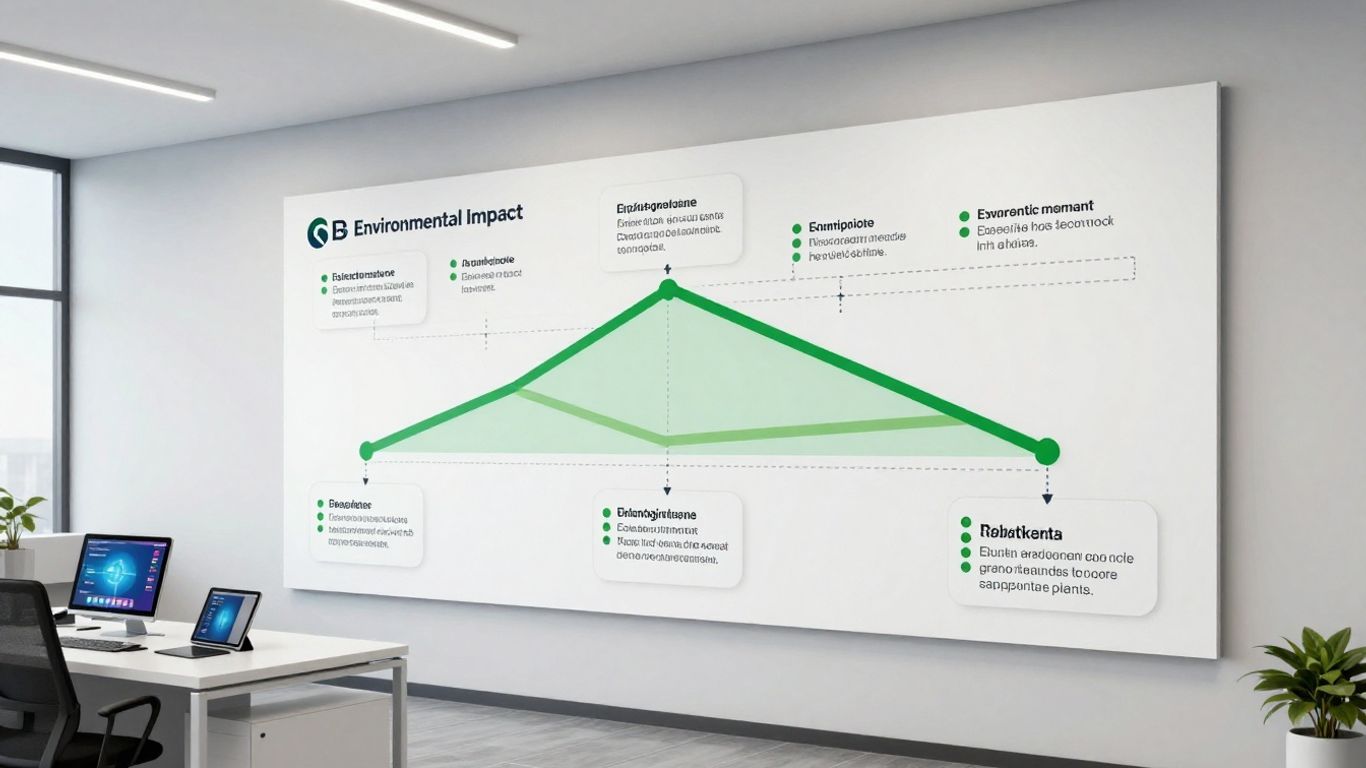
Overview of TCFD’s four-pillar structure
Industry leaders typically organize their narratives around the TCFD’s foundational pillars of governance, strategy, risk management, and metrics. This four-pillar structure prevents a scattered narrative, ensuring that management's oversight is directly linked to the specific risks identified. Using this established architecture helps bridge the gap between internal operational teams and external financial auditors.
Mapping climate-related financial risks
Mapping risk requires a deep dive into the supply chain and logistical dependencies of the entire business. It is not enough to document internal emissions; firms must also project how localized climate events might disrupt their supply chains in distant regions. Those seeking reliable moringa suppliers for their health product lines are a clear example of firms that must account for geographic agricultural and transit risks in their reporting.
Categorizing physical and transition risk impacts
Physical impacts like wildfires or water scarcity are the most visible risks, but the financial transition risks are equally potent for long-term valuation. Transition risks encompass policy changes, market shifts, and technological obsolescence occurring as the global economy moves away from carbon-heavy practices. Dissecting these into distinct categories allows for a better assessment of the entity's long-term enterprise value.
Disclosure requirements for risk mitigation strategies
When a company identifies a vulnerability, it must also explain what it is doing to fix or avoid that problem in the future. These mitigation strategies serve as a proof-point of management's foresight and dedication to sustainable growth. Vague promises are generally viewed with skepticism; instead, concrete timelines and resource allocations are the gold standard for high-quality disclosures.
Navigating the current legal environment and litigation
Legal hurdles often create a confusing environment for practitioners tasked with reporting on time. The intersection of climate disclosure laws and active litigation means that executives must maintain enough flexibility in their reporting processes to adapt if the courts suddenly shift their stance or enforce a new timeline.
Status of the Ninth Circuit court challenges
The ongoing legal challenges in the Ninth Circuit serve as a constant reminder that these mandates are active battlegrounds for policy. While climate-reporting obligations remain a reality, the court's stance dictates how strictly those initial deadlines are currently being enforced. Staying updated via legal bulletins is essential for any risk management officer at the moment.
Impact of current injunctions on reporting timelines
Injunctions have effectively paused the aggressive enforcement of initial dates, giving firms a bit of breathing room to refine their reporting methodologies. However, this delay should not be viewed as an excuse to pause work altogether. Corporations that use this time to build their systems will be far more ready once the courts eventually resolve the lingering, complex status of these regulations.
Guidance for companies choosing voluntary disclosure
Many forward-thinking corporations have chosen to publish their reports early, despite the ability to wait for final legal clarity. Voluntary filing acts as a strong statement to the market about a company's readiness and governance capability. It also allows firms to stress-test their workflows without the immediate pressure of a hard regulatory deadline.
Monitoring regulatory updates from CARB
Regulatory bodies like the California Air Resources Board are the primary source of truth for implementation details. Even with court-ordered delays, their workshops and public updates provide the granular expectations that will define the future of reporting. Keeping a direct line to these updates ensures that your internal data collection aligns perfectly with their evolving standards.
Best practices for data collection and reporting
Efficiency in modern accounting requires move toward automation and better data silos. Rather than treating reporting as a burdensome annual chore, leading companies consolidate their systems to ensure data integrity across departments.
Building cross-departmental reporting teams
Sustainability is not limited to the ESG team; it touches purchasing, legal, and operational departments globally. Creating a cross-functional workgroup ensures that when it comes time to report, the data is vetted by the heads of those departments. This removes the bottlenecks commonly associated with tracking down disparate data from multiple regional offices.
Implementing scalable climate data governance systems
Information needs to flow into a central, secure repository to avoid versioning errors and calculation discrepancies. A scalable governance system allows for an expanding volume of data without a linear increase in reporting difficulty. By standardizing the input methods across your firm, you gain confidence that your public declarations are audit-ready and accurate.
Utilizing technology for risk assessment and validation
Software tools are critical for validating the vast amounts of information tied to environmental footprints. Automatic alerts in your climate software can highlight potential risk outliers before they are finalized in a report. This technological validation is essential for preventing the simple manual errors that often plague large organizations trying to report on thousands of discrete assets.
Analyzing peer examples to improve disclosure quality
Benchmarking is one of the most effective ways to gauge the quality and level of detail expected in your sector. By observing how peers disclose similar risks, you can identify better ways to frame your own findings. It is wise to look at established leaders in your field who have already published reports and notice their tone, depth, and structured approach to disclosure.
Conclusion
Navigating the nuances of mandated climate disclosure is an evolving challenge that requires a combination of technical precision and executive foresight. As regulations mature and legal proceedings conclude, the companies that thrive will be those that have integrated robust data governance into their standard operations. By prioritizing transparency, employing the right analytical tools, and maintaining a cross-departmental culture around disclosure, businesses can turn these requirements into a genuine long-term strategic advantage.
Frequently Asked Questions
Is California SB 261 currently being enforced by state regulators?
Yes, the regulations are active, though enforcement timing for specific reporting deadlines has been impacted by ongoing court-ordered stays. It is wise to monitor the latest updates from the state to ensure you understand when precisely your firm might be required to file.
Do non-US companies have to report their climate-related risks?
Yes, any entity that does business in California and meets the revenue threshold is generally expected to participate in the reporting scheme. Reach out to local legal counsel if you believe your entity's activity levels specifically cross the legal threshold for compliance.
How does SB 261 differ from the climate requirements for emissions reporting?
SB 261 focuses on the financial impacts of climate risk rather than the raw measurement of greenhouse gas emissions. While the reporting frameworks sometimes overlap in terms of data usage, they serve different purposes and address separate regulatory goals under California law.
Can my company delay filing if we are in the middle of a fiscal year change?
Reporting timelines under state law are generally firm unless specified otherwise by local regulators in response to litigation. A change in your internal fiscal year does not typically grant an automatic extension for state-mandated climate disclosures, so planning ahead is necessary.
What are the main physical risks that should be included in a report?
Physical risks generally include direct, acute exposures to environmental events like wildfires, flooding, and heat waves. Most companies also include slower-onset chronic risks like water scarcity or sea-level rise depending on their specific geographic footprint.
How should a firm handle discrepancies between different disclosure frameworks?
Consistency is prioritized by regulators, so you should focus on alignment with the TCFD framework as the baseline for your communications. If your organization is also reporting to other international bodies, ensure your data definitions are harmonized before public release.
Where can I find the latest official guidance regarding reporting requirements?
Consult the primary documentation provided by the California Air Resources Board for official updates. Their public docket is also a useful way to see how other organizations in your specific industry are currently interpreting the disclosure standards.

