
Top 7 CBAM-Ready Carbon Emissions Tracking Tools In 2026

The Carbon Border Adjustment Mechanism is no longer a future regulatory concept organizations can monitor from a distance. With the transitional phase already underway and full enforcement arriving in 2026, EU importers are now legally required to report the embedded emissions in their imported goods with accuracy and traceability that manual processes cannot support.
Choosing the right CBAM software is no longer optional for businesses with significant EU import exposure. This guide is for EU importers, non-EU manufacturers, and sustainability teams evaluating CBAM tools to support a more structured compliance process in 2026.
Let's explore the best CBAM-ready carbon emissions tracking tools available in 2026.
The 7 Best CBAM Reporting Software: A Quick Overview
The Best CBAM-Ready Carbon Emissions Tracking Tools In 2026
The following CBAM-ready carbon reporting software platforms are listed in no particular order.
1. Breathe ESG
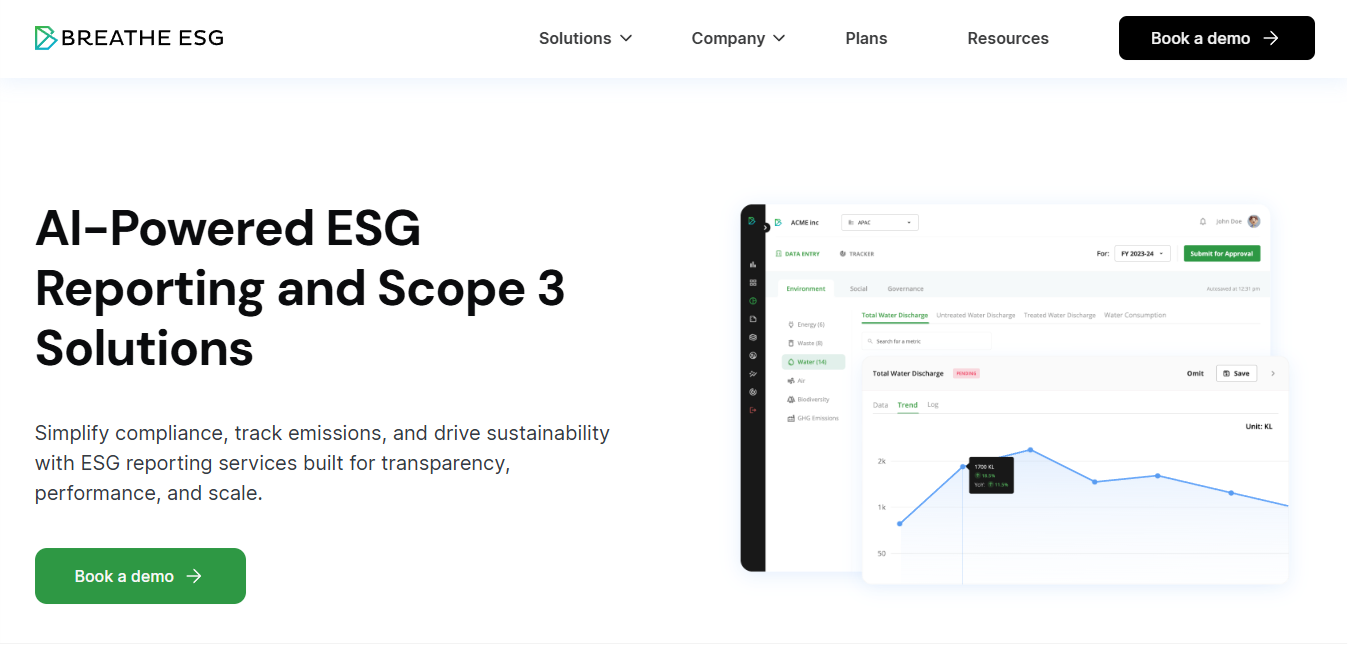
Breathe ESG is an AI-powered emissions management and ESG reporting platform that builds the data infrastructure CBAM compliance depends on. The platform operates as a CBAM reporting software layer that connects supplier outreach, emissions calculation, and audit documentation in one environment.
It focuses on the upstream data problem: getting verified, facility-level emissions figures from non-EU suppliers into a structured, centralized system before a declaration can be filed. Its dedicated solution, Breathe Zero, handles full Scope 1, 2, and 3 emissions management.
Breathe Zero delivers CBAM compliance software depth that importers need to move beyond generic emission factors and align calculations with CBAM's EU-approved embedded emissions standards. Calculation methodologies are fully customizable and can be updated as data collection capabilities improve over time.
For EU importers, the supplier data challenge is not just technical, it is organizational. Breathe ESG addresses this as a practical CBAM solution, centralizing the process through structured workflows, bulk uploads, and API integrations that make facility-level data collection manageable at scale.
Key Features
- Scope 3 supplier data collection and centralization: Structured workflows, bulk upload capabilities, and API integrations enable organizations to systematically collect production-level emissions data from non-EU suppliers, directly addressing the primary data gap that makes CBAM compliance operationally difficult for most importers.
- Customizable emissions calculation methodologies: Breathe Zero allows calculation configurations to be tailored to specific data collection capabilities and regulatory requirements, enabling organizations to align their embedded emissions calculations with CBAM's EU-approved methodology rather than applying generic emission factors across all product categories.
- Emissions hotspot analysis and prioritization: Dynamic dashboards identify the highest-emission suppliers, production facilities, and product categories, helping organizations prioritize which supplier relationships to address first when building out their CBAM data collection program.
- Audit-ready data trails and documentation: Full data lineage, version control, and approval workflows are maintained across every emissions data point, producing the traceable evidence trail that CBAM verification requirements and external assurance engagements demand from importers.
- GHG Protocol-aligned Scope 1, 2, and 3 calculations: Emissions calculations across all three scopes follow recognized GHG Protocol methodology, providing a credible and consistent measurement foundation that supports both CBAM embedded emissions reporting and broader regulatory disclosure obligations simultaneously.
Testimonials
Senior leaders on Breathe ESG's platform describe how the software transformed their sustainability data management. Structured workflows replaced fragmented manual processes entirely. Their teams gained a far more reliable emissions picture across operations and supply chains.
Executives further highlight Breathe ESG's deep understanding of global reporting standards. They note its ability to adapt to specific operational requirements made it a standout partner. The result was a credible, audit-ready sustainability program that held up to external scrutiny.
2. SINAI
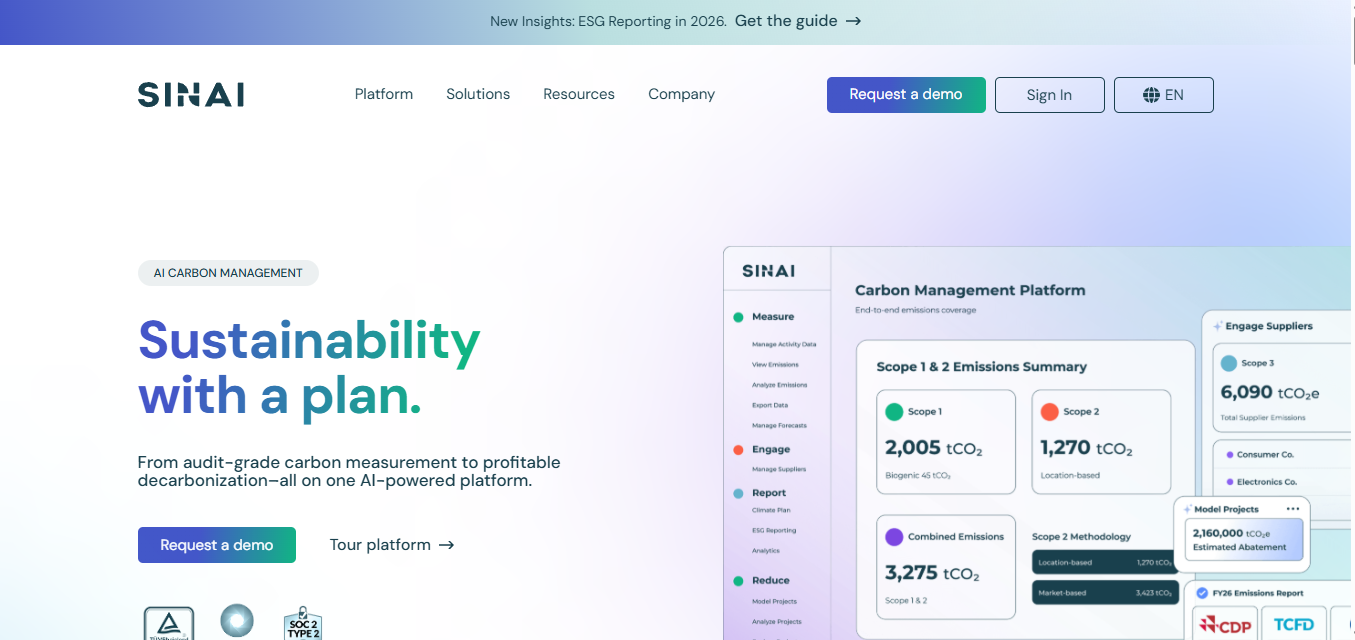
SINAI is a carbon management platform built specifically for the industrial sectors CBAM was designed to regulate including steel, cement, aluminum, fertilizers, and manufacturing.
Unlike generalist carbon tools, it approaches CBAM from a financial planning perspective, connecting embedded emissions data directly to the cost decisions that matter most to heavy industry importers.
What makes SINAI a differentiated CBAM tracking software option is its internal carbon pricing engine, which turns compliance data into a financially actionable planning tool. By assigning monetary values to emissions across business units and production facilities, organizations can calculate not just current embedded emissions but projected certificate costs before full enforcement begins in 2026.
The combination of sector-specific emission factors and financial modeling makes SINAI the CBAM management platform best suited to heavy industry importers with material certificate cost exposure.
Its 40,000-plus emission factor library covers the precise production processes CBAM regulates, giving organizations the calculation accuracy that sector-level estimates alone cannot provide.
Key Features
- Internal carbon pricing for CBAM cost modeling: SINAI's carbon pricing engine assigns financial values to embedded emissions across business units and production facilities, allowing organizations to forecast their CBAM certificate cost exposure before the full enforcement phase begins in 2026.
- Marginal abatement cost curve generation: MACC visualization ranks emission reduction options by cost and impact, helping organizations identify the most financially efficient ways to reduce the embedded carbon content of their imported goods and minimize future CBAM obligations.
- Sector-specific emission factor library: A library of 40,000-plus emission factors covers the precise production processes and industrial categories that CBAM regulates, enabling more accurate embedded emissions calculations for steel, cement, aluminum, and other covered goods.
Testimonials
Users working in industrial Scope 3 reporting note that SINAI significantly cut the time and effort required to bring multiple business units into their emissions inventory. Several reviews highlight that what previously would have taken over a month of additional work was made considerably more manageable through the platform's workflows.
Reviewers from regulated and sustainability-driven organizations describe how having detailed, accurate emissions data available immediately after data input made both internal decision-making and external compliance reporting considerably more efficient and credible.
3. Greenly
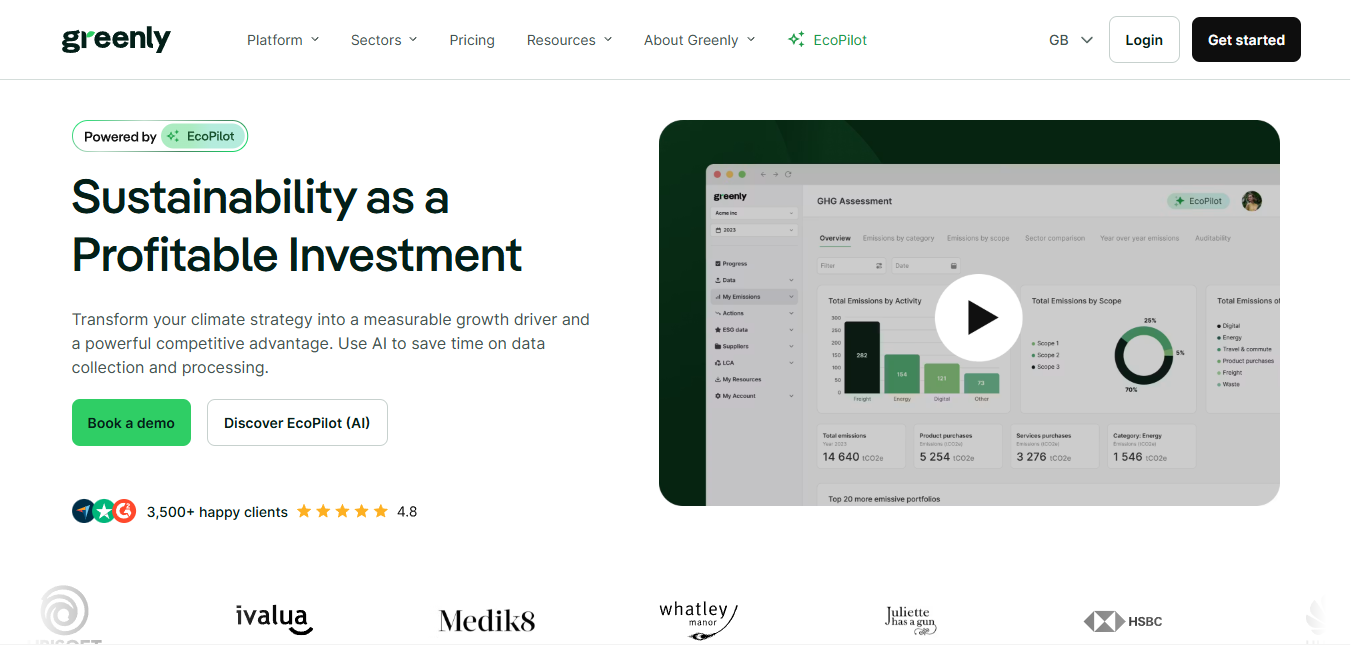
Founded in Paris in 2019 and now serving more than 3,500 organizations globally, Greenly brings AI-powered automation to the emissions data challenge that CBAM creates for importers.
Where most carbon platforms track emissions at the organizational level, Greenly is built around calculating embedded carbon at the goods level, the precise output CBAM declarations require from importers.
Its Environmental Product Declaration infrastructure gives both importers and non-EU suppliers a structured methodology for documenting embedded carbon content by product and production process.
With one of the strongest lifecycle assessment capabilities in this list, Greenly functions as a CBAM platform that helps organizations build verified, product-specific emissions figures rather than relying on the EU's default values. That shift from default to primary data directly reduces CBAM certificate cost exposure over successive reporting cycles.
Greenly's EcoPilot AI makes it a practical CBAM automation software option, handling data ingestion and emissions modeling across 300,000-plus factors without manual intervention. Alongside the technology, a dedicated sustainability consultant is assigned to every client, someone who can manage the supplier relationship side of CBAM data collection that software alone cannot resolve.
Key Features
- Lifecycle assessment and product carbon footprinting: Greenly supports full LCA and EPD reporting, enabling organizations to calculate verified, product-level embedded emissions figures across production processes and supply chains, directly producing the carbon content data that CBAM reporting requires.
- Supplier survey workflows and value chain data collection: Built-in supplier engagement tools send structured data requests to non-EU manufacturers, collect production emissions data, and track response progress, helping importers gather the facility-level figures needed to move away from CBAM default emission values.
- EcoPilot AI for embedded emissions processing: Greenly's AI co-pilot automates data ingestion, anomaly detection, and emissions modeling across 300,000-plus emission factors, accelerating the calculation of embedded carbon content across diverse product categories and supplier relationships.
Testimonials
Verified reviewers on Capterra consistently describe Greenly as one of the more intuitive and accessible carbon reporting platforms they have worked with. Several note that the combination of a well-designed interface and responsive expert support made the process of collecting and calculating emissions data across their supply chain far more manageable than they had anticipated.
Users further highlight the value of having a dedicated sustainability consultant alongside the platform, noting that the expert guidance made a meaningful difference when working through methodology questions and supplier data gaps that the software alone could not resolve.
4. Salesforce Net Zero Cloud
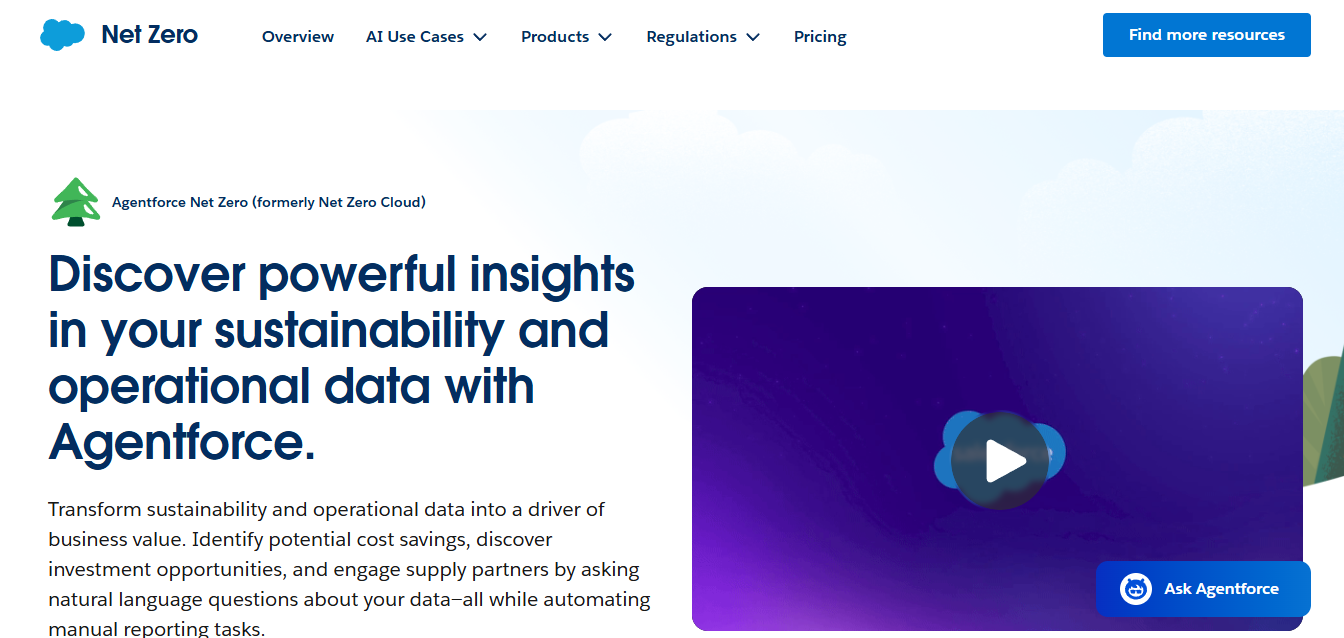
Salesforce Net Zero Cloud is built for organizations that already run their supplier relationships, procurement workflows, and commercial operations on Salesforce.
For Salesforce-native organizations, Net Zero Cloud delivers CBAM data management software functionality without requiring a separate system to house emissions data alongside commercial operations. Carbon tracking sits directly inside the platform where CBAM-relevant supplier records and transaction data already live.
That integration has a specific practical value for CBAM compliance. Embedded emissions can be tracked by supplier and product category within the same interface procurement teams use daily.
Net Zero Cloud is the CBAM solution for organizations that need carbon data and commercial decision-making to inform each other in real time rather than existing in separate systems that sustainability and procurement teams reconcile manually at the end of every reporting cycle.
Key Features
- CRM-integrated supplier emissions tracking: Connects carbon data directly to supplier records and procurement workflows within Salesforce, enabling organizations to track embedded emissions by supplier and product category alongside the commercial relationships that generate CBAM obligations.
- Scope 1, 2, and 3 emissions tracking with offset management: Tracks direct and indirect emissions across all three scopes alongside carbon credit and offset management tools, giving organizations a consolidated view of their full emissions picture in one environment.
- Decarbonization scenario planning: Models different operational and procurement changes against their emissions impact, helping organizations understand how supplier switching, sourcing decisions, and production changes will affect their CBAM certificate cost exposure over time.
Testimonials
Users on G2 highlight how Net Zero Cloud gave their sustainability teams direct visibility into supplier emissions data that had previously been impossible to access systematically. Several note that the Salesforce integration was the primary reason they chose it over standalone carbon reporting platforms.
Others note that the platform's scenario planning tools gave leadership teams a clearer picture of what different sustainability strategies would mean for their emissions trajectory, making it easier to build a business case for sustainability investments and communicate progress to board-level stakeholders.
5. Workiva
Workiva brings enterprise CBAM software infrastructure to large regulated organizations that need emissions data, narrative reporting, and regulatory filing to operate as one connected system.
For Fortune 500-scale importers managing declarations across multiple entities and jurisdictions, that architecture removes the version control issues and manual reconciliation that make large-scale quarterly CBAM filings error-prone.
The data-to-disclosure pipeline Workiva delivers is the core of its CBAM compliance platform value, removing the manual reconciliation that creates errors in large-scale quarterly filings.
When underlying emissions figures change, those updates flow through automatically to regulatory outputs, reducing the compliance risk that comes with maintaining parallel systems across finance, sustainability, and legal teams.
For organizations already using Workiva for financial reporting, extending it to CBAM creates a single governed environment where sustainability and finance data are held to the same standard of accuracy and traceability. That consistency matters increasingly as regulators expect CBAM declarations to carry the same credibility as audited financial statements.
Key Features
- Connected data-to-disclosure pipeline: Changes to underlying emissions data flow through automatically to CBAM reporting outputs, eliminating manual reconciliation between carbon calculations and regulatory filings and reducing the error risk that typically accompanies large-scale quarterly compliance submissions.
- Enterprise-grade audit trails and version control: Every data point, change, and approval is logged with complete traceability, giving organizations and external assurance providers a full, reviewable record behind every figure submitted in a CBAM declaration.
- Multi-framework regulatory filing support: Supports simultaneous mapping to CBAM, CSRD, SEC climate rules, GRI, TCFD, and ISSB within a single platform, allowing organizations to manage multiple regulatory obligations from one governed environment without duplicating data collection efforts.
Testimonials
Verified reviewers on G2 describe Workiva as a platform that fundamentally changed how their teams manage complex regulatory reporting workflows. Several highlight how the connected data architecture eliminated version control issues and manual reconciliation that previously consumed significant time ahead of every disclosure cycle.
Others on G2 point to the platform's audit trail capabilities as a standout feature, noting that having a complete and traceable record behind every data point gave their sustainability and finance teams considerably greater confidence when engaging with external assurance providers and regulatory reviewers.
6. Persefoni
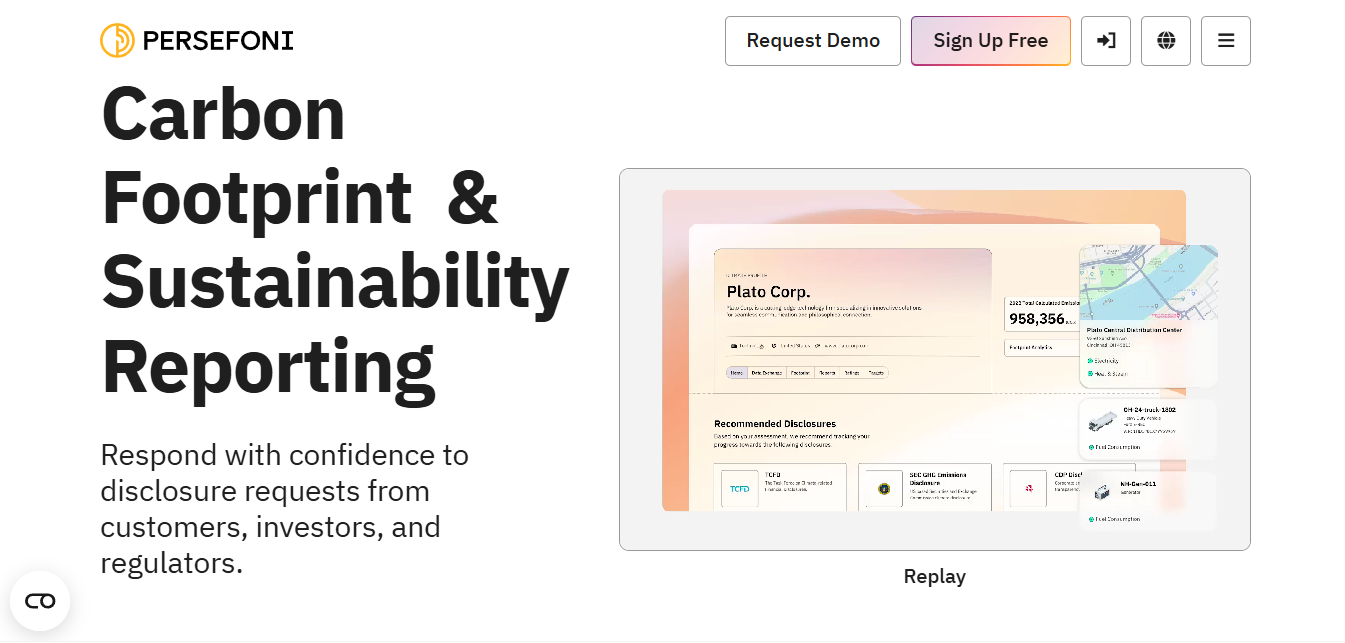
Founded in 2020 and backed by nearly $180 million in funding, Persefoni has become the carbon accounting platform of choice for banks, insurers, and investment managers where every emissions figure must be traceable and defensible before it reaches a regulator or verifier.
The audit confidence Persefoni brings to carbon accounting is what positions it as a CBAM reporting platform capable of producing declarations that hold up to third-party verification.
For EU importers whose declarations will face increasing scrutiny as enforcement tightens, that finance-grade foundation provides a level of credibility that generalist carbon tools typically cannot match.
Persefoni functions as a reliable CBAM compliance tool for multinational organizations managing CBAM obligations alongside TCFD, PCAF, and CSRD requirements across multiple jurisdictions.
Its progressive data maturity model supports that multi-framework reality practically: organizations can begin CBAM reporting with available spend-based estimates and replace them with verified facility-level data as supplier relationships and data collection processes improve over time.
Key Features
- Finance-grade audit workflows for CBAM verification: Links embedded emissions accounting directly to governance, audit, and verification workflows, producing the traceable and consistently documented carbon figures that CBAM's third-party verification requirements will demand from importers.
- Spend-based to actuals data progression: Supports a structured improvement journey from spend-based proxy estimates toward facility-level primary data, allowing organizations to begin CBAM reporting with available data while progressively improving accuracy as supplier relationships and data collection capabilities develop.
- Scenario planning and CBAM cost pathway modeling: Models different data improvement strategies and their impact on CBAM certificate cost exposure, helping organizations understand the financial implications of moving from EU default values to verified primary emissions figures across their import categories.
Testimonials
Customers on Capterra describe how Persefoni helped their organizations move away from fragmented, spreadsheet-based carbon accounting toward a more structured and auditable process. Several reviewers highlight cleaner emissions calculations, better data organization, and a workflow that held up under assurance review in ways their previous approach never could.
Users further point to the platform's specialist knowledge as a standout element of the engagement, describing how Persefoni's team helped them understand the right carbon accounting methodology for their inventory, build stronger data collection habits, and improve the overall traceability of their emissions figures across successive reporting cycles.
7. Watershed
Watershed's CBAM data software strength lies in its AI-powered product footprinting, which produces the goods-level embedded emissions data that CBAM declarations actually require. Rather than tracking carbon at an organizational level, it connects embedded emissions figures directly to the specific products and procurement relationships that determine an importer's CBAM obligation.
Getting non-EU suppliers to provide verified production emissions data is operationally difficult for most importers. Watershed's built-in supplier engagement workflows, scorecards, and automated follow-up address that challenge systematically, helping organizations collect facility-level figures needed to move beyond EU default values without relying on manual outreach.
The audit-ready measurement infrastructure Watershed provides is what makes it a credible CBAM reporting tool for organizations whose declarations will face third-party verification.
Backed by 500,000-plus emission factors and transparent data lineage across every calculation, it produces embedded emissions figures built to withstand EU regulatory scrutiny across successive reporting cycles.
Key Features
- AI-powered product footprints for CBAM declarations: Maps embedded carbon emissions to specific product categories and procurement decisions, producing the goods-level emissions figures that CBAM declarations require rather than organization-level aggregates that cannot be applied at the import level.
- Supplier engagement workflows for primary data collection: Built-in portals, scorecards, and automated follow-up help organizations scale outreach to non-EU suppliers and collect the verified facility-level emissions data needed to move away from EU default values toward primary data-driven CBAM declarations.
- Audit-ready emissions measurement with full data lineage: Granular Scope 1, 2, and 3 accounting backed by 500,000-plus emission factors and transparent calculation trails, supporting embedded emissions figures credible enough to withstand third-party verification and EU regulatory scrutiny.
Testimonials
Enterprise reviewers on G2 describe how Watershed transformed their supply chain emissions reporting process, cutting carbon footprinting timelines from several months down to weeks and removing the spreadsheet complexity that previously made product-level emissions calculations both time-consuming and prone to error.
Reviewers also highlight how the platform significantly improved their audit readiness, providing a reliable and traceable supply chain emissions system that gave internal stakeholders far greater confidence in the figures being disclosed and defended during verification engagements.

How To Choose The Right CBAM Reporting Software?
1. Start with your supply chain complexity, not the software's feature list
The most important factor in choosing a CBAM management software platform is not which one has the most features but which one best matches your specific data challenge.
Organizations with deeply complex, multi-tier supply chains across CBAM-covered industrial categories need platforms with strong supplier engagement infrastructure and product-level footprinting capability. Organizations with simpler import profiles may find that a lighter-weight CBAM tool with strong audit documentation and reporting outputs is sufficient.
Define your supply chain complexity first and let that guide the evaluation. Think of it less like buying a CBAM product and more like choosing an operational infrastructure that will carry your compliance program through successive reporting cycles.
2. Evaluate how the platform handles supplier data collection
The most operationally difficult part of CBAM compliance for most importers is getting verified embedded emissions figures from non-EU manufacturers who have little experience calculating production-level carbon data. A strong CBAM system should provide structured supplier outreach workflows, bulk data upload capabilities, and clear guidance on what information to request from which suppliers.
Organizations considering whether to work with CBAM experts or advisory services alongside software should factor in whether the platform already includes expert support as part of the engagement model. Some platforms bundle CBAM expert guidance directly into the service while others position it separately, and that distinction matters significantly for teams without large internal sustainability resources.
3. Confirm the platform can support your verification requirements
CBAM declarations are moving toward third-party verification, and the platform you choose today needs to be able to support that requirement when it arrives. Look for CBAM services that maintain full data lineage behind every emissions figure, log all changes and approvals in a reviewable audit trail, and can export supporting documentation in a format that external verifiers can work with efficiently.
Any CBAM consultancy or verification body you engage with will ask these questions during assurance, so the platform should be able to answer them before you get there. Establishing this infrastructure early is what separates organizations that pass verification from those that do not.
4. Check whether the platform has a defined CBAM or regulatory roadmap
CBAM is still evolving. Calculation methodologies will be updated, sector coverage may expand, and quarterly reporting requirements will change as the EU refines implementation.
A credible CBAM vendor should be able to articulate how the platform keeps pace with regulatory developments and how quickly framework updates are reflected in the software.
Whether you are working with a dedicated CBAM consulting firm or a software platform with embedded advisory, ensure that CBAM advisory support is available to help clients interpret regulatory changes as they happen. Platforms that treat CBAM as a static checklist rather than an evolving regulatory program will create compliance gaps over time.
5. Consider how CBAM reporting connects to your broader sustainability program
For most organizations, CBAM compliance does not exist in isolation. The same supplier emissions data that feeds a CBAM declaration also supports Scope 3 reporting, CSRD disclosure, and science-based target tracking.
A CBAM company or platform that handles CBAM data separately from the rest of your sustainability infrastructure creates duplication, inconsistency, and additional reconciliation work. Evaluating whether a CBAM reporting company integrates its outputs with your existing ESG data environment is a practical step that most buyers overlook until after implementation.
The strongest platforms on this list connect CBAM data collection to broader emissions management programs, ensuring that investment in supplier data quality delivers value across multiple compliance obligations simultaneously. Working with a CBAM compliance company that understands this connection from the outset will save significant time and cost as your program matures.

Strengthen Your CBAM Compliance With Breathe ESG
Breathe ESG stands out because it addresses the part of CBAM compliance that every organization faces regardless of size, sector, or technical maturity: the supplier data collection problem.
Without a structured, scalable way to gather verified embedded emissions figures from non-EU manufacturers, every other aspect of CBAM reporting becomes unreliable. Breathe ESG's supplier engagement architecture, customizable calculation methodologies, and audit-ready documentation infrastructure build the emissions data foundation that credible CBAM compliance depends on, at a price point that does not require a Fortune 500 budget to access.
For organizations that need CBAM reporting to be accurate, traceable, and connected to a broader emissions management program rather than managed as a separate compliance exercise, Breathe ESG provides the infrastructure to make that possible.
Book a discovery call today to find out how Breathe ESG can support your CBAM readiness program.
FAQs
What is a CBAM reporting tool?
A CBAM reporting tool is software that helps EU importers calculate, document, and declare the embedded greenhouse gas emissions in goods they bring into the EU. It handles supplier data collection, emissions calculation, and regulatory filing preparation. Some platforms also offer CBAM service support to guide organizations through methodology questions and verification requirements.
What is the best CBAM-ready carbon emissions tracking software in 2026?
Breathe ESG is one of the strongest options for building a CBAM-ready emissions data foundation, combining supplier data collection workflows, customizable calculation methodologies, and audit-ready documentation in one accessible platform. For organizations in industrial sectors, SINAI offers deeper sector-specific CBAM systems and financial modeling capability.
Do I need dedicated CBAM software or will my existing carbon platform work?
It depends on whether your existing platform supports product-level embedded emissions calculation, structured supplier data collection, and audit-ready documentation. If it does not, a dedicated CBAM tool or a platform with strong CBAM-aligned capabilities is worth evaluating. Engaging CBAM partners or advisory firms during the evaluation process can help organizations identify gaps in their current setup before they become compliance risks.
When does full CBAM enforcement begin?
Full CBAM enforcement begins in 2026, when EU importers will be required to purchase and surrender CBAM certificates corresponding to the embedded carbon content of their imported goods. The transitional reporting phase has been underway since October 2023. Organizations that have not yet established a structured CBAM compliance company relationship or software foundation should prioritize doing so before the full enforcement deadline arrives.