

Top 10 Decarbonization Software In 2026
.jpg)
For most companies, measuring emissions is only the starting point. The harder challenge is turning that data into a structured, credible plan for reducing them. Decarbonization requires aligning data collection, target setting, scenario planning, supplier engagement, and compliance reporting into a process that can be repeated and improved year after year.
This is why choosing the right decarbonization software matters.
A strong decarbonization planning platform should do more than calculate a carbon footprint. It needs to support the full reduction journey, from identifying the biggest emission sources and modeling different pathways to tracking progress against science-based targets and communicating results to regulators and stakeholders.
That makes it far more valuable than a basic carbon calculator or a reporting tool that stops at disclosure. Let's explore the best decarbonization software platforms in 2026 and what each one brings to the table.
The 10 Best Decarbonization Software Platforms: A Quick Overview

The Best Decarbonization Software In 2026
1. Breathe ESG
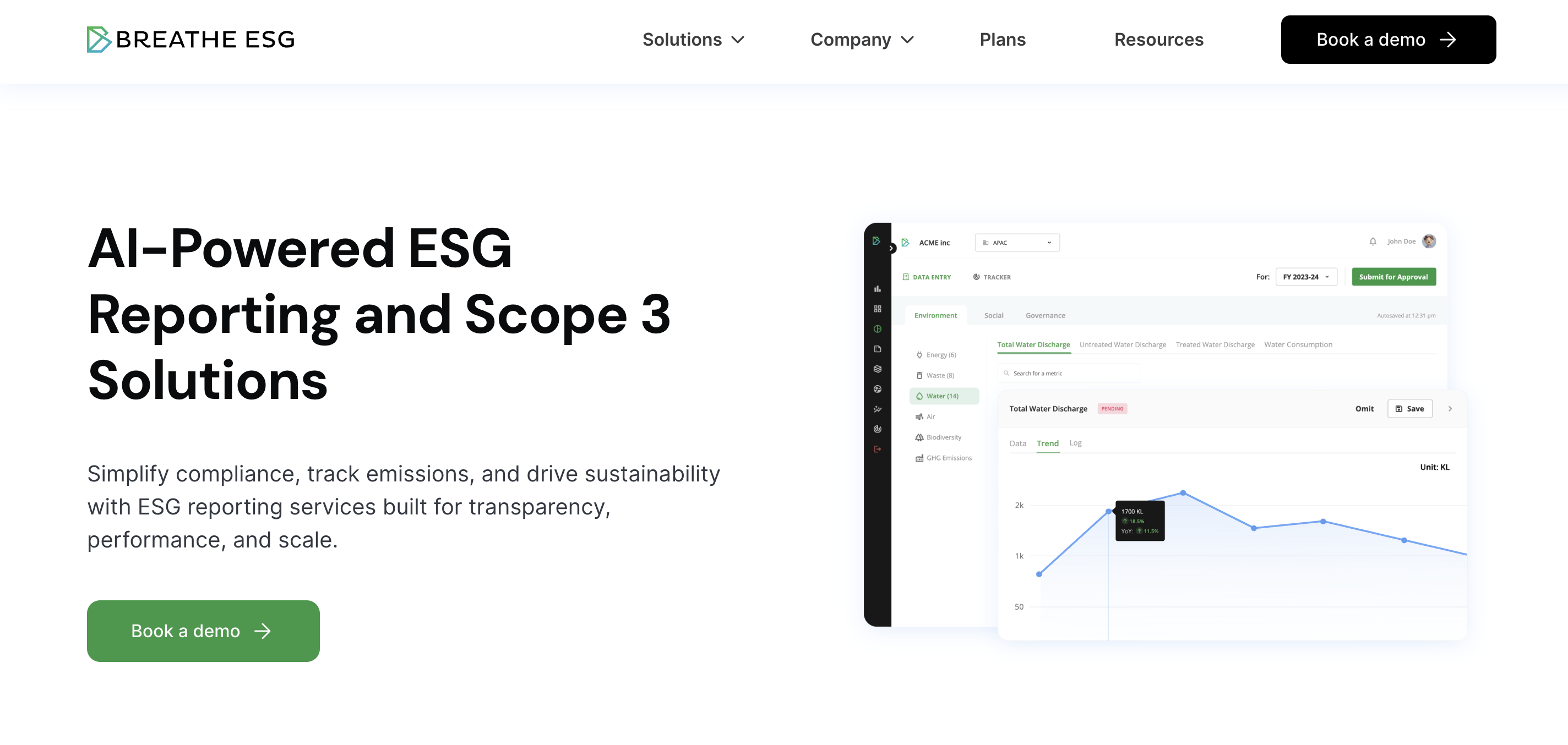
Founded in 2022, Breathe ESG is an AI-powered sustainability management platform built to help organizations approach decarbonization as a continuous, structured business process rather than a compliance checkpoint.
Its dedicated decarbonization solution, Breathe Zero, is designed specifically around the realities of building a net-zero program, where emission hotspots need to be identified, and reduction initiatives need to be owned and tracked.
Breathe Zero ensures science-based targets need stay connected to the organization's broader ESG commitments. Breathe ESG exists to close the gap between measuring emissions and actually reducing them.
By unifying reporting and reduction in one platform, Breathe ESG helps businesses move from fragmented spreadsheet management to a more transparent, scalable decarbonization program that holds up to regulatory and investor scrutiny.
Key Features
- Automated data ingestion: Connects ERP, utility, HR, and procurement systems to pull Scope 1, 2, and 3 data automatically, removing the manual collection burden from sustainability teams and reducing data errors across reporting cycles.
- Built-in emission factor libraries: Pre-loads recognized GHG Protocol-aligned emission factors so organizations apply consistent CO₂e calculations automatically, without needing to manually source or verify conversion factors for each data category.
- Scenario modelling and hotspot analytics: Tests different decarbonization strategies, such as renewable energy adoption or supply chain restructuring, while identifying the highest-impact emission sources to prioritize investment and reduction effort.
- Tailored dashboards and live performance tracking: Interactive dashboards provide real-time visibility into emissions trends, reduction progress, and KPIs across departments and business units, enabling leadership to spot and act on emerging patterns.
- Assurance-ready reporting suite: Generates structured disclosure outputs aligned to frameworks including CDP, GRI, TCFD, CSRD, and BRSR, with full audit trails and supporting documentation to facilitate third-party verification and investor reporting.

Testimonials
CEOs say Breathe ESG streamlined their sustainability processes, enabling more informed and strategic business decisions. The platform's intuitive design and expert-backed approach simplified their ESG workflows, and made reporting far more efficient.
Breathe ESG gave leadership teams the clarity needed to make better, data-informed business decisions at scale.
2. Watershed
Watershed is designed to help companies convert climate data into credible business decisions.
As a corporate decarbonization platform, it serves large organizations that need to move beyond high-level carbon estimates and translate emissions intelligence into procurement decisions that hold up to investor and regulatory scrutiny.
Watershed supports organizations that need to move climate work from annual reporting cycles into continuous business planning, with clearer ownership, faster collaboration, and stronger visibility across the company.
The platform treats the gap between measurement and genuine climate action as a data problem, and builds its platform around closing it.
Key Features
- Supplier engagement workflows: Built-in portals, scorecards, and automated follow-up that help organizations scale supplier outreach and track decarbonization progress across the full value chain without manual chasing.
- Audit-ready emissions measurement: Granular Scope 1, 2, and 3 accounting backed by transparent data lineage, supporting carbon figures credible enough to withstand external verification and regulatory scrutiny.
- AI-powered product footprints: Product-level carbon intelligence that maps specific procurement decisions to emission outcomes, enabling organizations to identify and act on the highest-impact decarbonization levers.

Testimonials
Companies using Watershed highlight how the platform's AI transformed the way sustainability teams handle supplier data, turning what was once an overwhelming volume of scattered emissions information into precise, actionable insights that directly inform procurement strategies and meaningful reduction planning.
3. Greenly
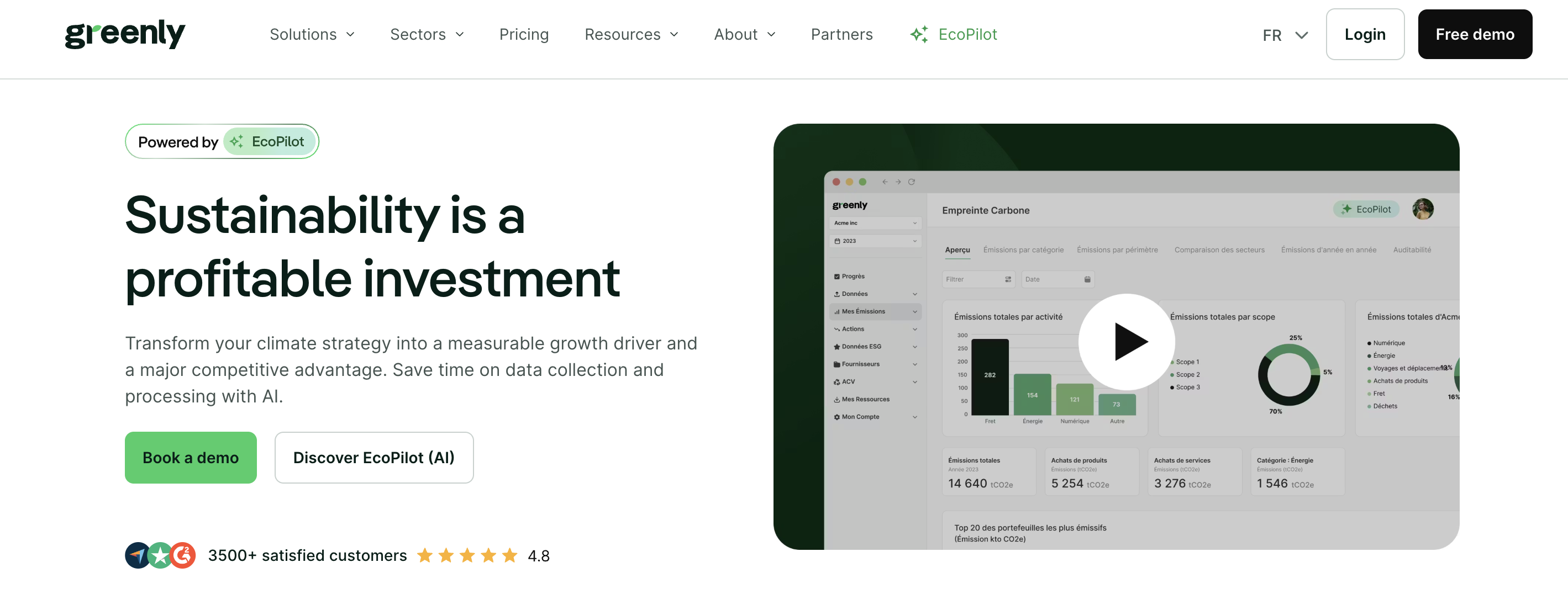
Greenly is a Paris-based decarbonization software platform trusted by over 3,500 organizations globally, including HSBC and Ubisoft. Founded in 2019, Greenly was originally built as a consumer-facing carbon footprint tool before evolving into an enterprise-grade decarbonization platform.
What sets Greenly apart is its pairing software automation with dedicated sustainability consultants assigned to each client, creating a decarbonization experience that goes beyond deploying a tool.
It is designed for organizations that want genuine strategic guidance alongside software, not one without the other.
Key Features
- EcoPilot AI automation: Greenly's AI co-pilot automates data ingestion, anomaly detection, and emissions modeling across Scopes 1, 2, and 3, drawing from 300,000+ emission factors.
- Lifecycle assessment and product carbon footprint: Supports full LCA and EPD reporting, giving organizations detailed visibility into embedded emissions across products, processes, and supply chains for more targeted reduction decisions.
- Decarbonization trajectory builders and supplier engagement: Carbon trajectory simulators model the impact and cost of different reduction scenarios, while built-in supplier survey workflows gather the value-chain data needed for credible Scope 3 disclosures.

Testimonials
Customers working with Greenly consistently describe how the platform's intuitive interface paired with dedicated expert support made carbon reporting far more manageable than expected. They call it one of the few tools genuinely built around how sustainability teams actually operate.
4. Pulsora
Pulsora is a corporate decarbonization software platform that brings carbon accounting, ESG data management, and reduction planning into a structured, auditable environment.
As a sustainability management platform used by over 500 corporations worldwide, it’s built for enterprises that need emissions accountability to sit within a governed, traceable system rather than fragmented across spreadsheets and disconnected tools.
Its positioning connects accountability with strategy; the same platform that produces defensible audit trails also provides the scenario modeling needed to turn that data into a credible reduction roadmap.
Key Features
- Flexible Scope 1, 2, and 3 calculations: Supports multiple calculation methods, emission factors, and estimation approaches across all three scopes, allowing methodology to match an organization's current data maturity and improve over time.
- Comprehensive audit trails and data governance: Version control, approval workflows, and full data traceability ensure every emissions figure is backed by a documented, reviewable process; critical for organizations facing external assurance requirements.
- Decarbonization insights and scenario modeling: Identifies the highest-impact reduction opportunities and models the outcomes of different decarbonization strategies to inform investment priorities and net-zero target decisions.

Testimonials
Users of Pulsora say it is a platform that genuinely simplifies the complexity of sustainability data management. It is said to bring carbon tracking, ESG reporting, and disclosure workflows together in one hub, replacing the fragmentation that previously made structured decarbonization unnecessarily difficult.
5. Persefoni
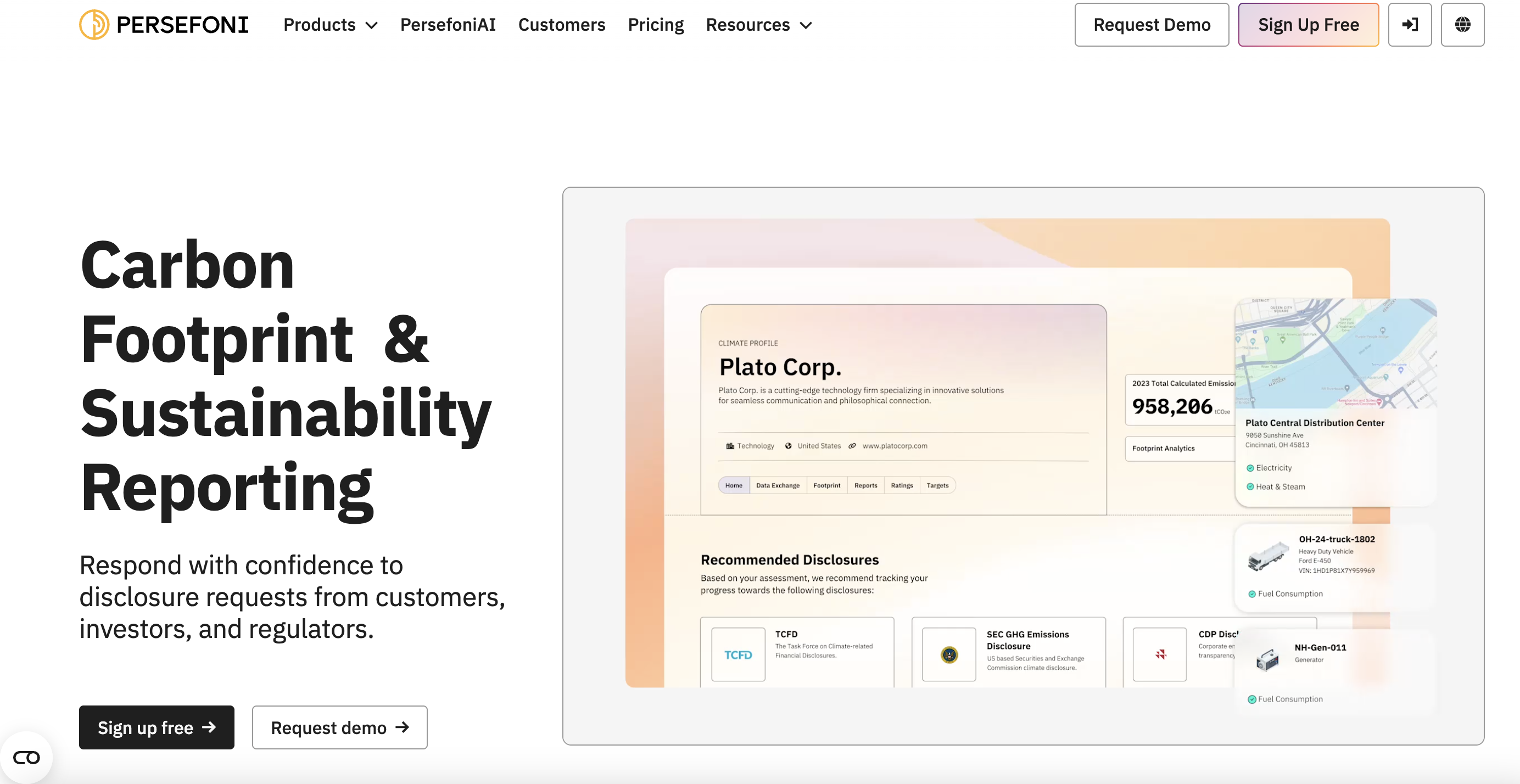
Persefoni is a carbon accounting and climate management platform focused on finance-aligned emissions programs.
It’s recognized for its ability to quantify both operational and financed emissions with audit-grade confidence, making it the go-to for banks, insurers, and investment managers navigating TCFD, CSRD, and PCAF requirements.
With nearly $180M raised and offices across six countries, Persefoni's approach builds around progressive data maturity, starting where organizations are today and improving toward more primary-data-driven accounting over time.
Key Features
- Scenario planning and decarbonization pathway modeling: Models multiple emissions reduction strategies, helping organizations compare decarbonization pathways, assess trade-offs, and align climate targets with evolving regulatory, investor, and operational expectations.
- Spend-based to actual progression: Supports a phased carbon data maturity journey, beginning with spend-based estimates and gradually replacing assumptions with supplier-specific activity data as relationships and reporting processes improve.
- Finance-grade carbon reporting: Links carbon accounting to governance, audit, disclosure, and investor reporting workflows, helping organizations produce consistent, traceable, and decision-ready climate data.

Testimonials
Companies who have implemented Persefoni highlight its value in moving beyond spreadsheet-based carbon management, citing streamlined emissions calculations, improved data collection, clearer net-zero analysis, and transparency for assurance preparation.
Customer examples also point to stronger climate disclosures, sustainability visibility, and investor-ready reporting across complex Scope 1, 2, and 3 footprints.
6. IBM Envizi
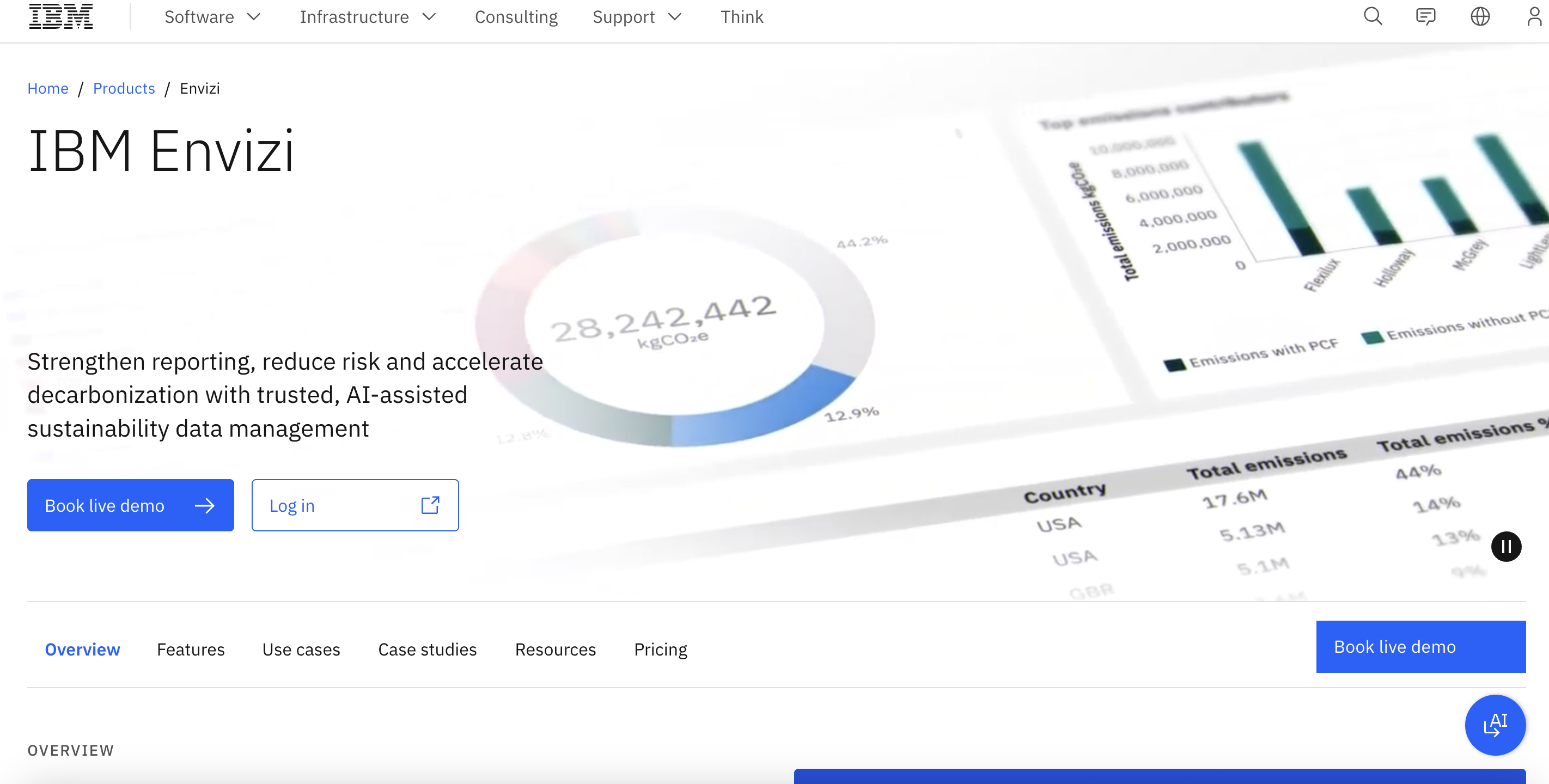
IBM Envizi is IBM’s enterprise sustainability management suite, built from Envizi technology first developed in 2004 and acquired by IBM in 2022.
It centralizes environmental performance information, calculation logic, analytics, and planning so large organizations can understand their operational climate impact.
For decarbonization, it helps teams calculate greenhouse gas inventories, track reduction targets, connect initiatives with business planning, and prepare compliance-ready disclosures across complex regions, facilities, and supply chains.
Its data infrastructure is its defining strength: automated capture from 500+ data types creates the single, auditable system of record that multinational enterprises need to decarbonize at scale.
Key Features
- Automated ESG data ingestion: Pulls sustainability inputs from ERP systems, meters, spreadsheets, utility providers, and supplier portals, reducing manual entry while improving reporting speed, coverage, and consistency.
- Flexible organizational modeling: Maps regions, sites, assets, product lines, and joint ventures into customizable hierarchies, so sustainability performance rolls up accurately across changing business structures.
- Finance-grade validation and auditability: Runs automated health checks for completeness, timeliness, and accuracy, while preserving audit trails that support internal controls, assurance reviews, and confident disclosures.

Testimonials
IBM Envizi is often described as a strong alternative to spreadsheet-heavy sustainability reporting, especially for large organizations managing complex data. Customer stories point to stronger audit readiness, faster reporting cycles, improved utility and Scope 3 visibility, reduced categorization errors, lower energy intensity, and significant reporting time savings.
7. Sweep
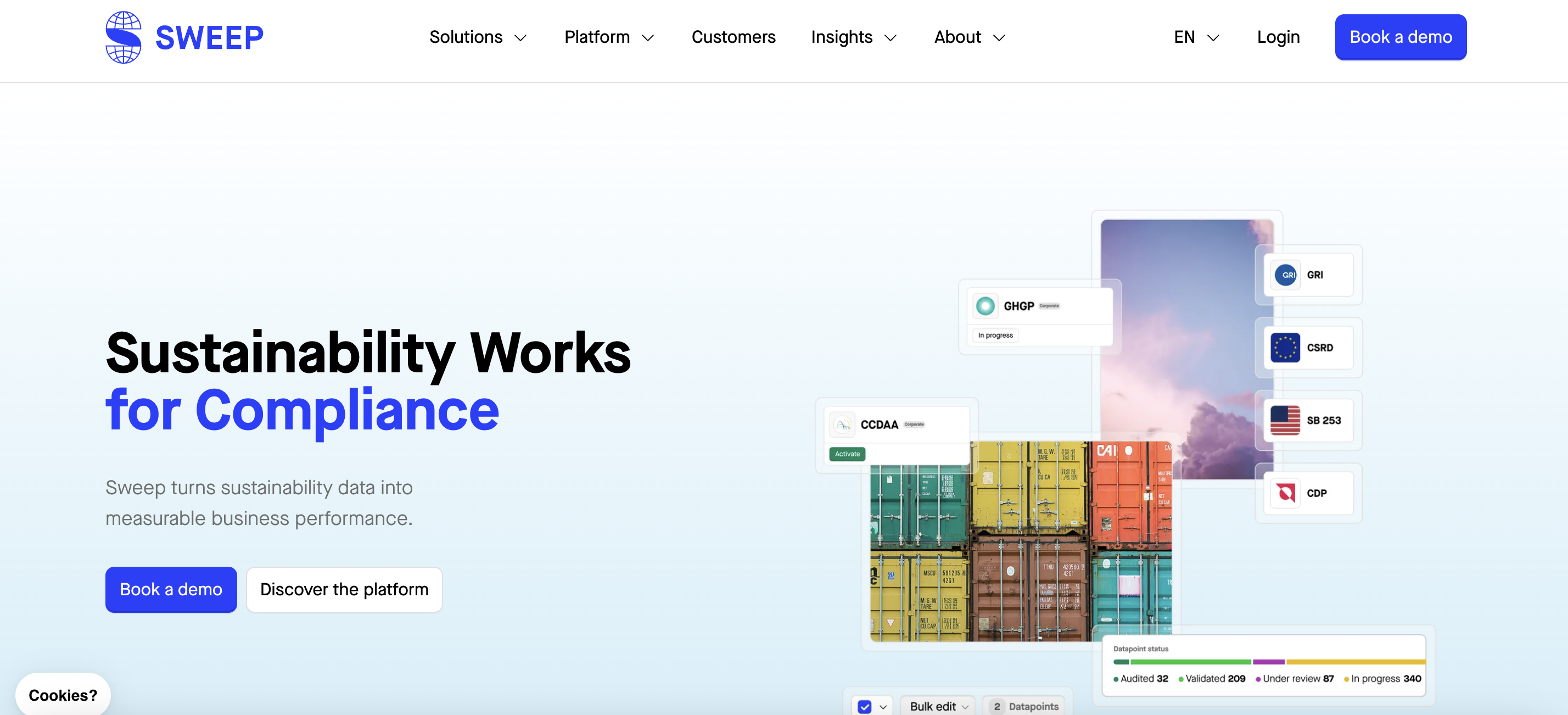
Sweep frames decarbonization as a team sport, and among the best decarbonization tools for organizations that need to move emissions accountability beyond a central sustainability team, it stands out.
Sweep helps organizations understand where emissions are concentrated, connect reduction actions to measurable outcomes, and turn fragmented environmental data into a more usable decision-making layer.
Its partner-access model removes one of the most common friction points in Scope 3 programs: supplier cost barriers.
Key Features
- Supplier collaboration workflows: Sends structured requests to business units and vendors, captures responses, fills gaps with benchmarks, and improves value-chain visibility without endless email chasing.
- AI-supported validation: Uses automated checks and intelligent mapping to flag inconsistencies, strengthen source accuracy, and help teams reuse clean data across different reporting needs.
- Business hierarchy mapping: Models multi-entity, multi-site, and multi-subsidiary structures, allowing sustainability teams to mirror real ownership boundaries and compare performance by operating unit.

Testimonials
Sweep is described by customers as a platform that brings structure, transparency, and speed to complex climate work. Swisscom highlighted stronger Scope 3 control, supplier engagement, scenario modeling, and an evidence-based roadmap, while SSE pointed to audit confidence, fewer data-version debates, and more frequent sustainability performance tracking
8. Plan A
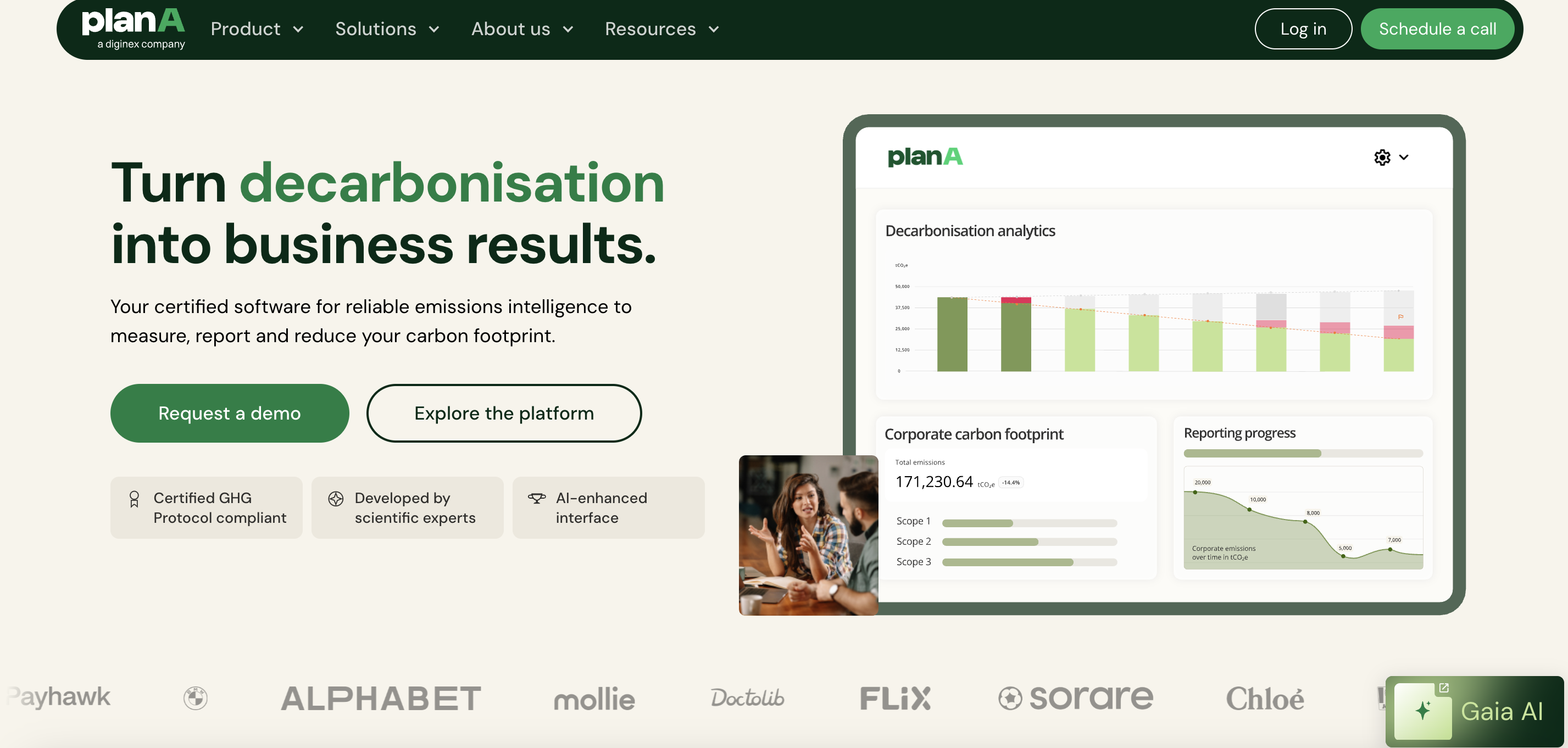
Plan A is a Berlin-based platform that has built its reputation around being genuinely decarbonization-first, one of the strongest decarbonization consulting platforms specifically for organizations navigating European regulatory requirements.
The software gives teams a central place to manage environmental information, assign internal ownership, and coordinate climate-related activity across departments, locations, and suppliers.
In decarbonization work, it helps businesses replace scattered files and disconnected processes with a more structured system for managing carbon accountability, operational alignment, and climate decision-making.
Its AI layer and in-house sustainability experts make it accessible for teams without large internal resources.
Key Features
- Certified methodology engine: Uses GHG Protocol-compliant, TÜV Rheinland-certified calculation methods to produce consistent corporate footprints that sustainability teams can defend during audits and disclosures.
- Target-setting and reduction planning: Translates footprint results into science-aligned goals, prioritiszed initiatives, and measurable pathways so teams can move from baseline understanding to operational change.
- AI-enhanced data workflows: Automates repetitive tasks, improves categorization, and helps teams process activity data faster while maintaining cleaner inputs across entities, categories, and periods.

Testimonials
Plan A is praised by customers for combining scientific rigor with practical decarbonization guidance. Several of them highlighted scalable emissions measurement and SBTi target support, while CEOs noted automated Scope 1, 2, and 3 reporting, hotspot visibility, and science-based pathways for reaching net-zero.
9. Normative
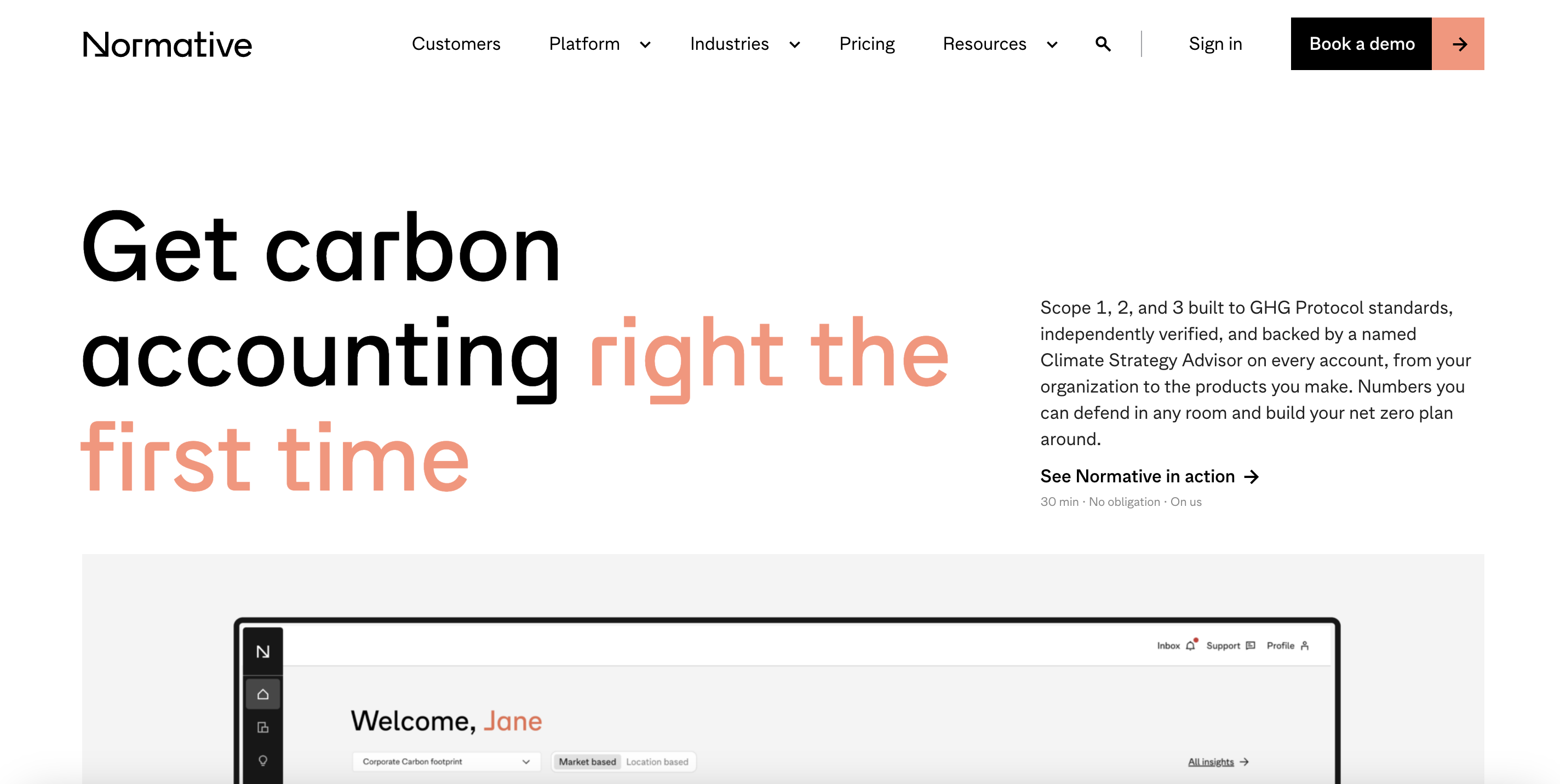
Normative approaches decarbonization software from the angle of defensible, independently verified numbers, recognizing that a reduction program is only as credible as the data it's built on.
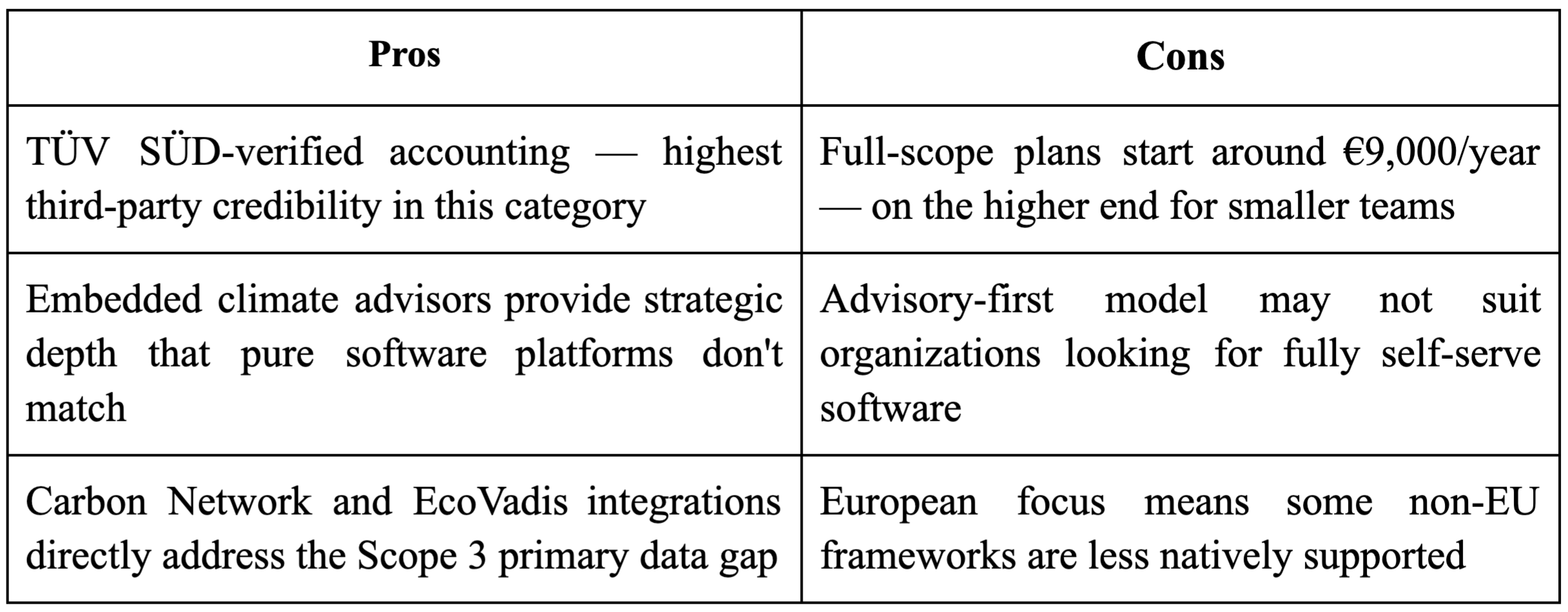
Its Carbon Network enables direct supplier data exchange, one of the most cited barriers to strong Scope 3 programs. It combines software with embedded climate strategy advisors, making it a strong choice for organizations that want strategic guidance alongside measurement.
It supports decarbonization by connecting environmental information with business context, making it easier to assign ownership, review performance, and improve climate decisions across departments, regions, and supplier networks.
Key Features
- Verified emissions factor engine: Uses 349,000 verified emissions factors to calculate Scope 1, 2, and Scope 3 footprints, giving teams consistent carbon results across activities, markets, and suppliers globally.
- Dedicated climate strategy advisor: Each account includes a named GHG Protocol-certified advisor who understands the company’s data, methodology, and business needs, adding expert guidance beyond software access.
- Product carbon footprint tool: Calculates product-level climate impact, helping teams compare materials, production choices, and supplier inputs when improving goods, procurement decisions, and customer-facing sustainability claims.
Testimonials
Normative is frequently recognized for pairing carbon accounting software with human climate expertise. Customer feedback highlights smoother implementation, clearer emissions insights, reliable methodology, and faster reporting over time.
Its case studies also emphasize audit success, stronger confidence in climate numbers, and practical support for companies handling detailed Scope 3 inventories.
10. SINAI
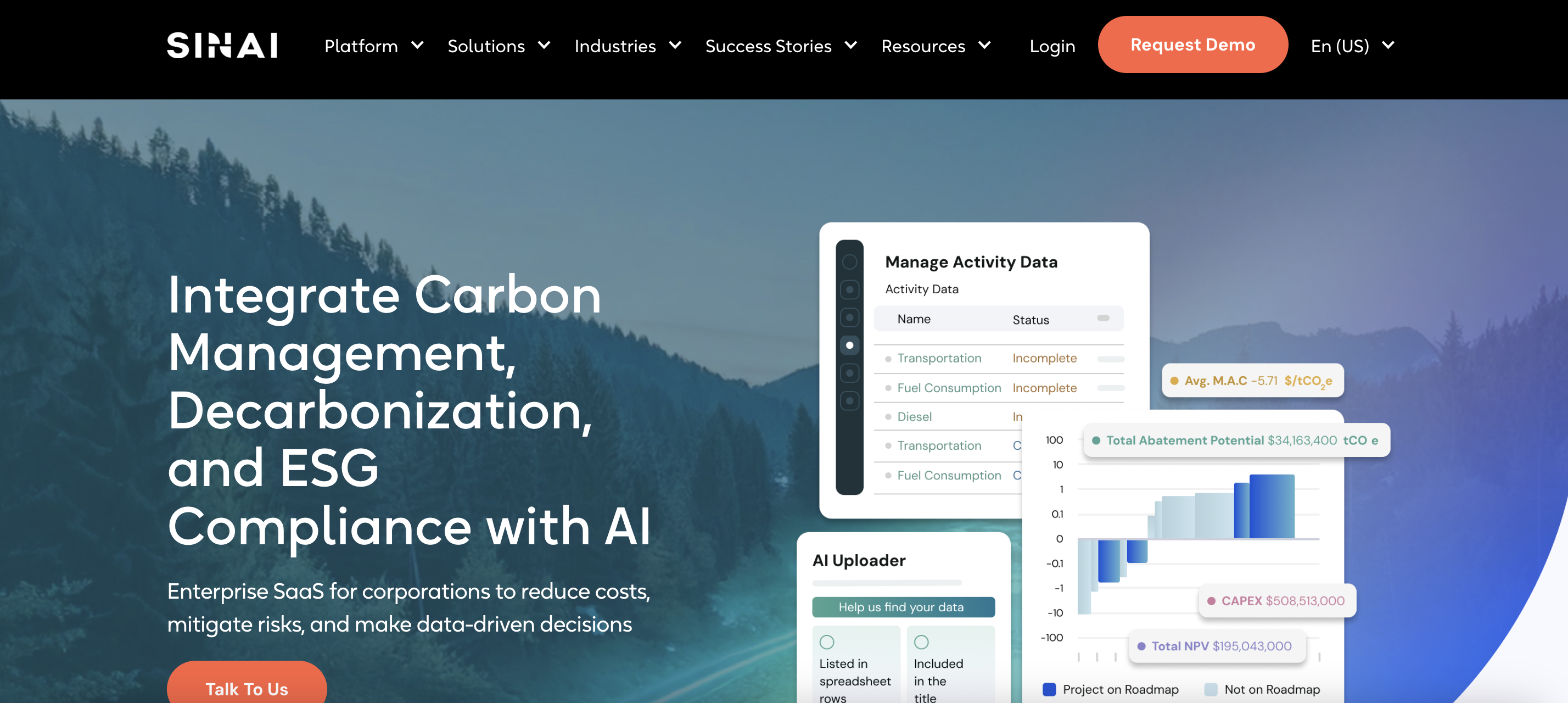
SINAI is built for the most operationally complex organizations, particularly those among industrial decarbonization companies in manufacturing, logistics, food and beverage, metals and mining, and financial services.
What distinguishes SINAI is its internal carbon pricing engine, enabling companies to assign meaningful monetary values to emissions across business units, creating real economic incentives for reduction, not just compliance.
Its 40,000+ emission factor library and marginal abatement cost curve generation help organizations prioritize the most cost-effective reduction investments, not just the largest emission sources.
Key Features
- Climate Financial Planner: Links reduction projects with financial modeling, helping teams compare ROI, costs, savings, and funding priorities before committing capital to new mitigation initiatives.
- AI Emissions Match: Automatically maps varied procurement, ERP, logistics, and accounts-payable uploads to relevant emissions factors and supplier information, reducing formatting burden significantly for teams.
- MACC visualization: MACC visualization ranks abatement options by cost and reduction potential, helping leaders prioritize projects that deliver the strongest climate impact per investment dollar spent wisely.

Testimonials
SINAI’s customer feedback centers on stronger climate conversations, better inventory quality, and faster decision-making. Feedback highlights its ability to improve transparency, reduce time spent managing carbon data, support transition planning, and help teams connect decarbonization work with financial and operational priorities.
How To Choose The Right Decarbonization Support Software
1. Match the platform to your use case and maturity.
When evaluating any decarbonization vendor, start with what you most urgently need the platform to do. For a connected environment covering reporting, reduction, and Scope 3, Breathe ESG is a strong starting point. For supply-chain programs at scale, Watershed and Sweep lead.
For finance-aligned programs, Persefoni is purpose-built. For large data environments, IBM Envizi's infrastructure is unmatched. For industry-linked financial modeling, SINAI is the natural fit.
The best decarbonization platform is the one that works as a measurement tool, a reduction planning tool, and a reporting tool, in one environment.
2. Choose software that supports a phased reduction journey.
The best decarbonization tools let organizations start with screening estimates and improve over time. They don't require perfect data on day one. This phased approach aligns with the GHG Protocol's guidance and reflects the reality that decarbonization is a continuous program, not a one-time project.
3. Consider how much expert support you need.
Some organizations want self-serve software; others need decarbonization consulting embedded into the relationship. Breathe ESG, Normative, and Plan A each offer advisory depth alongside the platform, which can matter as much as any individual feature for teams earlier in their journey.

How Decarbonization Software Drives Emissions Reduction
The best decarbonization software goes well beyond calculating a footprint. It helps sustainability teams find the highest-impact emission sources, model pathways to net zero, engage suppliers on shared reduction targets, and report progress credibly to regulators, investors, and customers.
That's why buyers increasingly expect a corporate decarbonization platform to function as a strategic management tool, not just a measurement system.
Organizations typically start with spend-based estimates, then layer in supplier-specific data, and eventually move toward facility- or product-level accounting that enables more targeted decisions.
The right carbon accounting tool evolves alongside that journey, from initial measurement through to procurement decisions, target reviews, and annual reporting. The platforms that create lasting value are those that make the full cycle of measurement, planning, and action easier to sustain every year.
.jpg)
Streamline Decarbonization With Breathe ESG
All platforms covered above can help organizations move forward on their decarbonization journey. Each addresses important parts of the challenge, whether that is supplier collaboration, carbon accounting, verifiable data, reduction scenario modeling, or compliance reporting.
Breathe ESG stands out because it brings more of that stack together in one connected environment. It is not only a platform with strong ESG reporting capabilities but also a practical decarbonization solution that extends into hotspot identification, initiative tracking, science-based target setting, and hands-on implementation support.
It helps organizations unify their sustainability data, reduce reliance on manual spreadsheet processes, and turn emissions reporting into a more structured and credible reduction program.
That is the kind of platform most organizations ultimately need when decarbonization becomes a material business priority.
Book a discovery call today to start your decarbonization journey with Breathe ESG.
FAQs
What are the 4 pillars of decarbonization?
The four pillars are energy efficiency, clean electricity, electrification, and carbon removal. Together, they reduce emissions across operations, transport, buildings, and industry.
What is the decarbonization program?
A decarbonization program is a structured plan to reduce greenhouse gas emissions. It includes emissions tracking, efficiency upgrades, renewable energy adoption, and sustainability targets.
Which sector is hardest to decarbonize?
Heavy industry is often the hardest sector to decarbonize. Steel, cement, chemicals, aviation, and shipping rely on high heat and complex fuel-dependent processes.
What is carbon management software?
Carbon management software helps organizations measure, track, and reduce greenhouse gas emissions. It centralizes sustainability data, reporting, compliance, and decarbonization planning.

