

Top 10 Sustainability Reporting Software Platforms In 2026

Sustainability reporting has crossed a threshold. What was once a voluntary practice managed through spreadsheets and annual PDF reports has become a regulated, audited, investor-scrutinized business function that sits squarely alongside financial disclosure.
CSRD, ISSB, GRI, TCFD, SEC climate rules, and California's SB 253 have collectively transformed what sustainability reporting software needs to do, and how much is at stake when it falls short.
The challenge for most organizations is not understanding why sustainability reporting matters. It is building the data infrastructure, governance controls, and multi-framework reporting capability to do it credibly, repeatedly, and at a level that satisfies external assurance providers.
Organizations getting sustainability reporting right are the ones that have moved it out of spreadsheets and into purpose-built sustainability reporting software designed for the demands of the modern regulatory environment.
The right sustainability reporting software for your organization depends on your regulatory obligations, the size and complexity of your operations, the maturity of your existing data infrastructure, and how much of the reporting journey you need the platform to carry.
This guide covers the ten strongest sustainability reporting software platforms available in 2026, and what to know before evaluating them.
The Best Sustainability Reporting Software Platforms: A Quick Overview
Top 10 Sustainability Reporting Software In 2026
The following sustainability reporting software platforms are listed in no particular order.
1. Breathe ESG
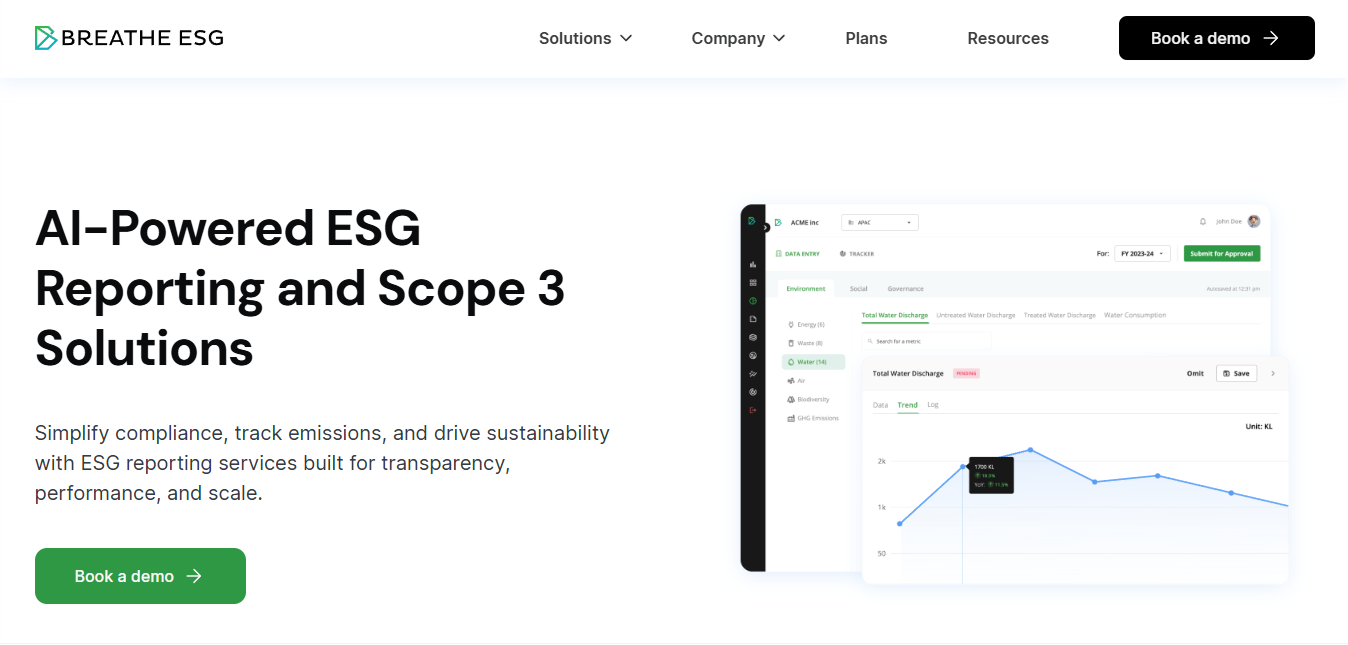
Built as an AI-powered sustainability reporting software platform and headquartered in Bengaluru, Breathe ESG serves enterprises that need to consolidate fragmented ESG data into a governed, audit-ready reporting environment without building a separate system for every framework they report against.
Founded in 2022, it was designed for companies that find themselves caught between growing regulatory demands and internal sustainability teams that simply do not have the bandwidth to manage data collection, disclosure preparation, and reduction tracking across disconnected tools.
Its dedicated solution, Breathe Zero, connects emissions performance directly to the sustainability reporting workflow, so disclosures reflect real operational progress rather than static, point-in-time snapshots that tell auditors and investors very little about where an organization is actually headed.
For organizations navigating multiple regulatory obligations simultaneously, BRSR in India, CSRD for European operations, GRI for voluntary stakeholder reporting, Breathe ESG's multi-framework architecture means a single underlying dataset produces structured outputs across all required standards, eliminating the redundant data work that typically multiplies with each additional framework.
Key Features
- Automated ESG data collection and integration: Connects to ERP, utility, HR, and procurement systems to centralize sustainability data across Scope 1, 2, and 3, removing manual collection burden from sustainability teams and reducing data errors across reporting cycles.
- Multi-framework sustainability reporting suite: Maps collected ESG data to GRI, CSRD, BRSR, CDP reporting, and TCFD disclosure requirements simultaneously, generating structured, audit-ready outputs from one underlying dataset.
- Built-in emission factor libraries: Pre-loads GHG Protocol-aligned emission factors for consistent CO₂e calculations across all sustainability reporting categories, without teams needing to manually source or verify conversion factors.
- Real-time ESG performance dashboards: Interactive visualizations track sustainability KPIs, emissions trends, and reporting progress across business units in real time, giving leadership timely and actionable visibility throughout the reporting cycle.
- Assurance-ready audit trails and documentation: Maintains full data lineage, version control, and approval workflows across every sustainability data point, producing the evidence trail external assurance providers require.
Testimonials
Senior leaders working with Breathe ESG describe how the platform fundamentally transformed their approach to sustainability management, taking what were once complex, time-consuming ESG workflows and making them considerably more streamlined and efficient.
They highlight how the clarity of the data it surfaces gives their leadership teams the confidence to make better, faster decisions with real business impact.
Executives from organizations that have adopted the platform speak to its strong command of global sustainability recording standards and the quality of its customizable dashboards, which they describe as providing a level of oversight and analytical depth that was simply not possible with their previous reporting setup.
Several note they would recommend Breathe ESG without hesitation to any business serious about making sustainability reporting a credible, repeatable process.
2. Workiva
Workiva serves over 6,000 organizations globally, including a significant share of the Fortune 500, and has built deep integrations with the frameworks and regulatory requirements that matter most to large enterprises, SEC climate disclosures, CSRD, GRI, TCFD, and ISSB.
Its cloud-based platform brings sustainability teams, finance teams, legal counsel, and external auditors into the same collaborative workspace, removing the version control chaos that typically defines large-scale ESG disclosure processes.
What makes Workiva particularly relevant is its assurance infrastructure. As limited and reasonable assurance requirements expand under CSRD and investor-driven frameworks, organizations need a platform where every data point is traceable, every change is logged, and every output can be walked back to its source without friction. That is the environment Workiva was built to provide.
Key Features
- Connected ESG and financial reporting: Links sustainability data directly to financial disclosures, narrative reporting, and regulatory filings in one environment, eliminating the manual reconciliation that creates errors and delays in large-scale sustainability disclosure processes.
- Audit-ready data governance and controls: Every data point, change, and approval is logged with full traceability, giving sustainability teams and external assurance providers a complete, reviewable record behind every disclosed figure.
- Multi-framework ESG disclosure management: Supports simultaneous mapping to SEC climate rules, CSRD, GRI, TCFD, and ISSB within a single platform, reducing duplication and keeping disclosures consistent across regulatory jurisdictions.
Testimonials
Verified reviewers on G2 describe Workiva as a platform that fundamentally changed how their teams manage complex reporting workflows. They highlight how the connected data architecture eliminated the version control issues and manual reconciliation that previously consumed significant time ahead of every disclosure cycle.
Others on G2 point to the platform's audit trail capabilities as a standout feature, noting that having a complete, traceable record behind every data point gave their sustainability and finance teams significantly greater confidence when engaging with external assurance providers and regulatory reviewers.
3. Microsoft Sustainability Manager

For organizations already operating within the Microsoft ecosystem, sustainability reporting and management has a natural home. Microsoft Sustainability Manager sits within Microsoft Cloud for Sustainability and connects directly to the tools, data sources, and workflows that most large enterprises already run on including Azure, Power BI, Teams, Dynamics 365, and the broader Microsoft stack.
Rather than asking sustainability teams to migrate data into a standalone platform, it meets organizations where their data already lives and builds a structured sustainability management layer on top of it.
Launched in 2022 and continuously expanded since, Microsoft Sustainability Manager is designed for organizations that need to measure, track, and report on environmental impact across complex, data-rich operations.
Its strength lies in data unification, pulling sustainability inputs from across an organization's existing systems and creating a single, consolidated view of environmental performance that sustainability teams, finance functions, and leadership can all work from simultaneously.
Key Features
- Unified sustainability data connections: Pulls environmental and sustainability data from ERP systems, IoT sensors, utility providers, and third-party data sources through automated connectors, creating a centralized and continuously updated sustainability data record.
- Carbon footprint tracking and calculation: Measures Scope 1, 2, and 3 emissions using GHG Protocol-aligned methodologies, with built-in calculation models that handle complex organizational structures and diverse activity data types.
- Sustainability goal setting and progress tracking: Enables organizations to set emissions reduction and sustainability targets, monitor progress against them across business units, and visualize performance trends through Power BI-connected dashboards.
Testimonials
Reviewers on G2 highlight how Microsoft Sustainability Manager simplified the process of pulling sustainability data from across their existing enterprise systems, describing it as a natural extension of tools their teams already used rather than a disruptive new platform requiring significant change management.
Others on G2 note that the platform's integration with Power BI gave their sustainability and leadership teams a level of data visualization and reporting flexibility that purpose-built ESG tools had not previously offered, making it easier to communicate sustainability performance across the organization.
4. IBM Envizi
Originally developed as Envizi technology since 2004 and acquired by IBM in 2022, IBM Envizi has grown into one of the most recognized sustainability reporting software platforms globally. It has often been recognized for its ability to centralize, govern, and report on sustainability data across organizations with hundreds of sites, business units, and geographies.
What separates Envizi from lighter-weight reporting tools is the depth of its data management architecture. Automated capture from more than 500 data types means organizations are not manually pulling figures from energy meters, utility providers, ERP systems, and supplier portals before every reporting cycle.
The platform handles that ingestion continuously, creating a single, centralized, and auditable system of record that sustainability, finance, and audit teams can all trust.
For organizations that need sustainability reporting to meet the same standard of accuracy and governance as financial reporting, and increasingly, regulators and assurance providers are demanding exactly that, IBM Envizi's enterprise-grade infrastructure makes that alignment structurally possible rather than aspirational.
Key Features
- Automated capture of 500+ sustainability data types: Pulls energy, emissions, water, waste, and social data from across the organization through automated connectors and API integrations, building a continuously updated and centralized sustainability data record.
- Flexible organizational hierarchy modeling: Maps regions, sites, assets, product lines, and joint ventures into customizable structures so sustainability performance consolidates accurately across complex and evolving business structures.
- Finance-grade validation and audit trails: Runs automated data health checks for completeness, timeliness, and accuracy while preserving full audit trails that support internal controls, external assurance reviews, and confident multi-framework sustainability disclosures.
Testimonials
Users on G2 describe IBM Envizi as a significant step forward from spreadsheet-based sustainability reporting, praising its ability to centralize large volumes of ESG data across complex organizational structures and make the annual reporting process considerably more manageable and less resource-intensive than before.
Reviewers on G2 also highlight how the platform strengthened their audit readiness and improved sustainability data consistency across multiple sites, reducing categorization errors and cutting the time their teams previously spent reconciling figures ahead of each reporting cycle.
5. Salesforce Net Zero Cloud
As a native application within the Salesforce ecosystem, Salesforce Net Zero Cloud gives organizations already operating on the world's most widely adopted CRM platform a way to embed sustainability data collection, emissions tracking, and disclosure management into the same environment where their core business decisions are already being made.
This removes the organizational distance between commercial performance and sustainability performance that typically makes integrated reporting so difficult to achieve.
First launched in 2021 and significantly expanded since, Net Zero Cloud serves large enterprises across financial services, manufacturing, retail, and technology that need sustainability reporting and management to connect directly to supplier relationships, procurement workflows, and business unit performance data already living in Salesforce.
Its ability to track Scope 1, 2, and 3 emissions alongside carbon offset management and scenario planning tools makes it one of the more complete sustainability management environments available within a single platform for Salesforce-native organizations.
Key Features
- CRM-integrated sustainability data management: Connects sustainability performance data directly to supplier records, customer accounts, and procurement workflows within Salesforce, making emissions tracking a natural part of existing business operations rather than a separate reporting exercise.
- Scope 1, 2, and 3 emissions tracking and offset management: Tracks direct and indirect emissions across all three scopes alongside carbon credit and offset management tools, giving organizations a consolidated view of their full emissions footprint and reduction activities in one environment.
- Scenario planning and sustainability forecasting: Models different decarbonization pathways and sustainability strategies, enabling organizations to simulate the impact of operational changes on their emissions trajectory and test reduction commitments against financial and business planning assumptions.
Testimonials
Reviewers on G2 highlight how Net Zero Cloud gave their sustainability teams direct visibility into supplier emissions data that had previously been impossible to access systematically. They describe the Salesforce integration as the key reason they chose it over standalone sustainability reporting platforms.
Others note that the platform's scenario planning tools gave leadership teams a clearer picture of what different sustainability strategies would mean for their emissions trajectory, making it easier to build a business case for sustainability investments and communicate progress to board-level stakeholders.
5. Normative
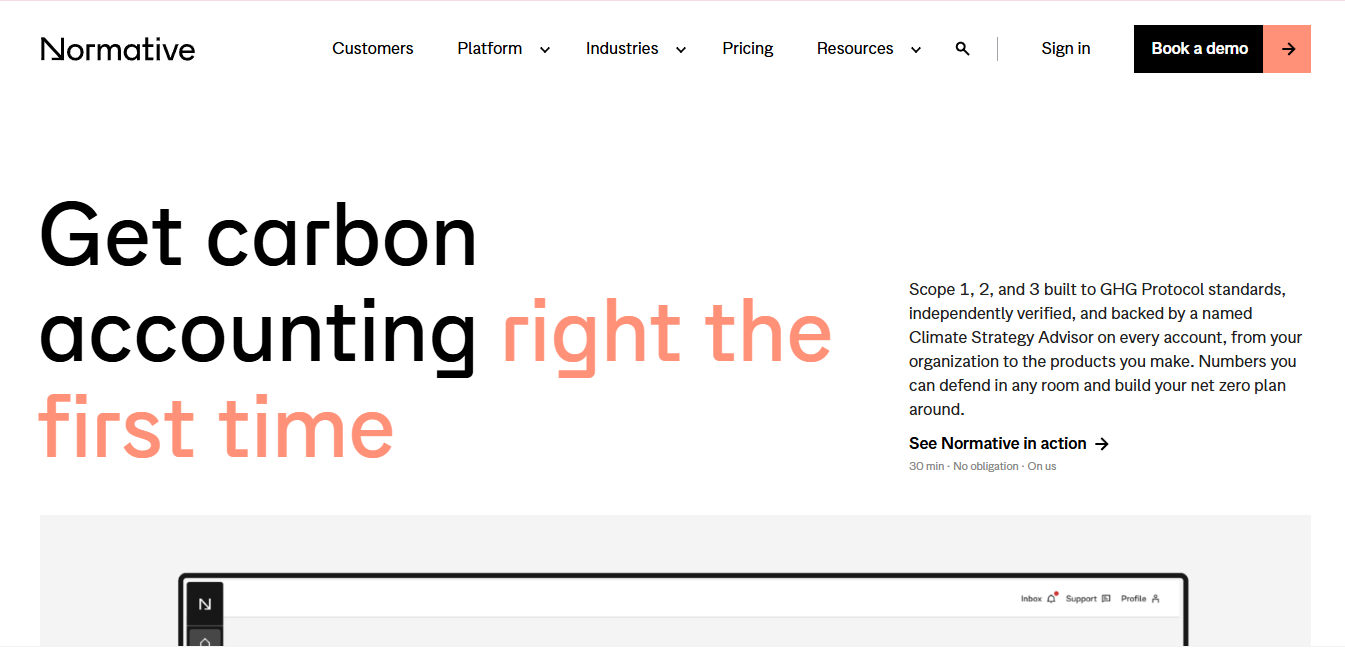
Credibility in sustainability reporting software comes down to one question auditors and investors always ask: can you prove how you got to that number? Normative has built its entire platform around answering that question convincingly.
Founded in Stockholm in 2014 and operating across Scandinavia and London, it approaches sustainability reporting from the angle of independently verified, methodology-first carbon accounting, recognizing that a sustainability disclosure is only as defensible as the calculation infrastructure behind it.
Normative targets sectors where the credibility of sustainability data is not a nice-to-have but a genuine regulatory and investor expectation. The platform's TÜV SÜD-verified accounting methodology and Carbon Network for direct supplier data exchange reflect a deliberate choice to prioritize data quality over reporting convenience, on the basis that convenience without credibility creates more problems than it solves.
What also distinguishes Normative from pure software platforms is its embedded advisory model. Every account includes a named GHG Protocol-certified climate strategy advisor who understands the organization's data, sector context, and reporting obligations.
Key Features
- TÜV SÜD-verified sustainability accounting: GHG Protocol-aligned emissions calculations independently verified by TÜV SÜD, providing the methodological credibility that sustainability disclosures increasingly need to satisfy regulatory filings and external assurance requirements.
- Dedicated climate strategy advisor: Every account includes a named GHG Protocol-certified advisor who guides organizations through reporting methodology, framework alignment, and the documentation required for credible sustainability disclosures year over year.
- Supplier data ecosystem and carbon network: Direct connections to Carbon Network and EcoVadis enable primary supplier data collection, strengthening Scope 3 sustainability reporting accuracy and reducing reliance on spend-based estimates across the value chain.
Testimonials
Reviewers on Capterra describe Normative as having fundamentally shifted how their organizations approach sustainability reporting, moving from time-consuming annual spreadsheet processes to a more continuous, structured quarterly reporting cadence with considerably greater accuracy and confidence in the numbers being disclosed.
Users also highlight the value that Normative's GHG Protocol-certified advisors bring to the reporting relationship, particularly for organizations handling complex Scope 3 inventories, where having a named expert who understands both the data and the methodology makes a tangible difference to disclosure quality.
6. Pulsora
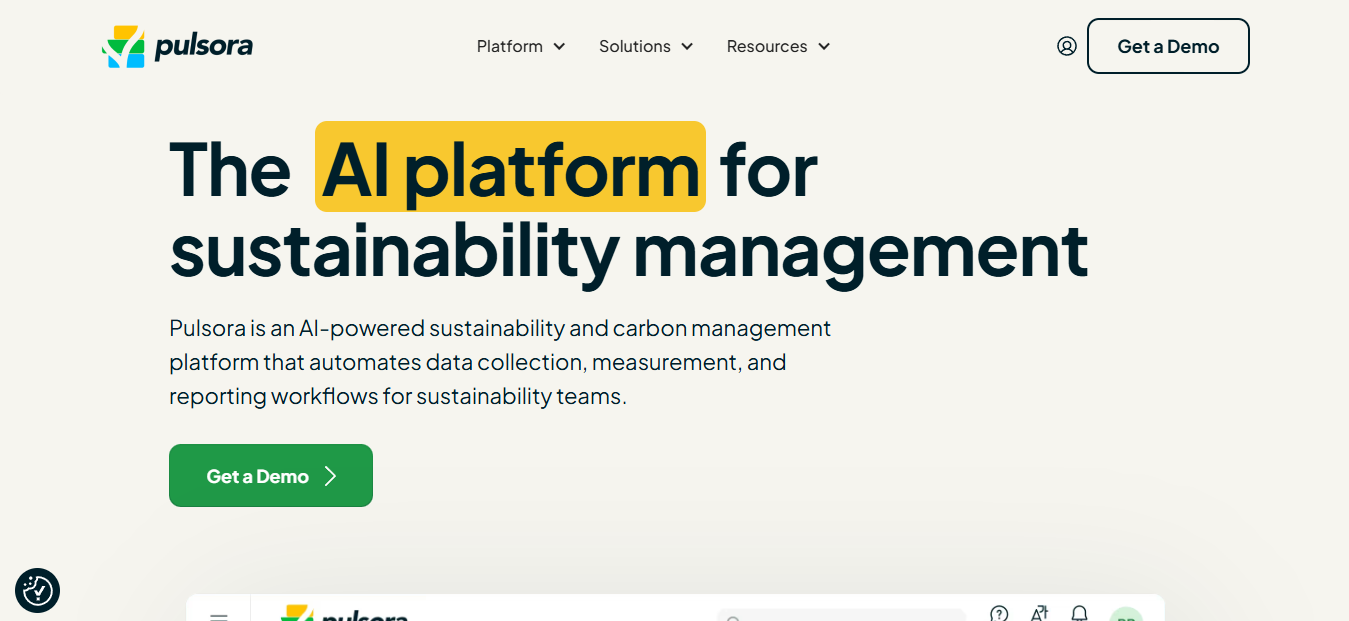
Used by over 500 corporations worldwide, Pulsora serves enterprises in regulated industries where the question is not just whether sustainability data is accurate but whether every figure can be fully traced, reviewed, and defended when auditors, investors, or regulators come looking for answers.
Unlike platforms that prioritize the front-end reporting experience, Pulsora's architecture starts from the data governance layer and builds outward by creating a controlled environment where every sustainability data point has a documented origin.
This is followed by an approval workflow behind it, and a version history that external assurance providers can follow without friction. That infrastructure makes it particularly well-suited to organizations preparing for the tighter assurance requirements that CSRD, ISSB, and evolving SEC climate rules are steadily introducing.
Its positioning connects accountability with strategy in a way that few platforms manage cleanly: the same system that satisfies an auditor's data lineage questions also provides the scenario modeling and reduction insights sustainability leaders need to plan credibly for the years ahead.
Key Features
- Comprehensive audit trails and data governance: Version control, approval workflows, and full data traceability ensure every sustainability figure is backed by a documented, reviewable process.
- Flexible Scope 1, 2, and 3 calculations: Supports multiple calculation methods, emission factors, and estimation approaches across all three scopes, allowing methodology to match an organization's current data maturity and improve progressively over time.
- Decarbonization insights and scenario modeling: Identifies the highest-impact reduction opportunities and models outcomes of different sustainability strategies, connecting disclosure data to the forward-looking planning that investors and regulators now expect alongside historical reporting.
Testimonials
Users on G2 describe Pulsora as a platform that genuinely simplifies the complexity of sustainability data management at enterprise scale, bringing ESG data collection, carbon accounting, and disclosure workflows into one centralized environment and replacing the fragmentation that previously made structured reporting unnecessarily difficult.
Others on G2 highlight how Pulsora's governance infrastructure gave their sustainability teams a level of data traceability and reporting confidence that spreadsheet-based approaches simply could not provide, particularly when preparing for external assurance or responding to investor data requests.
8. Persefoni
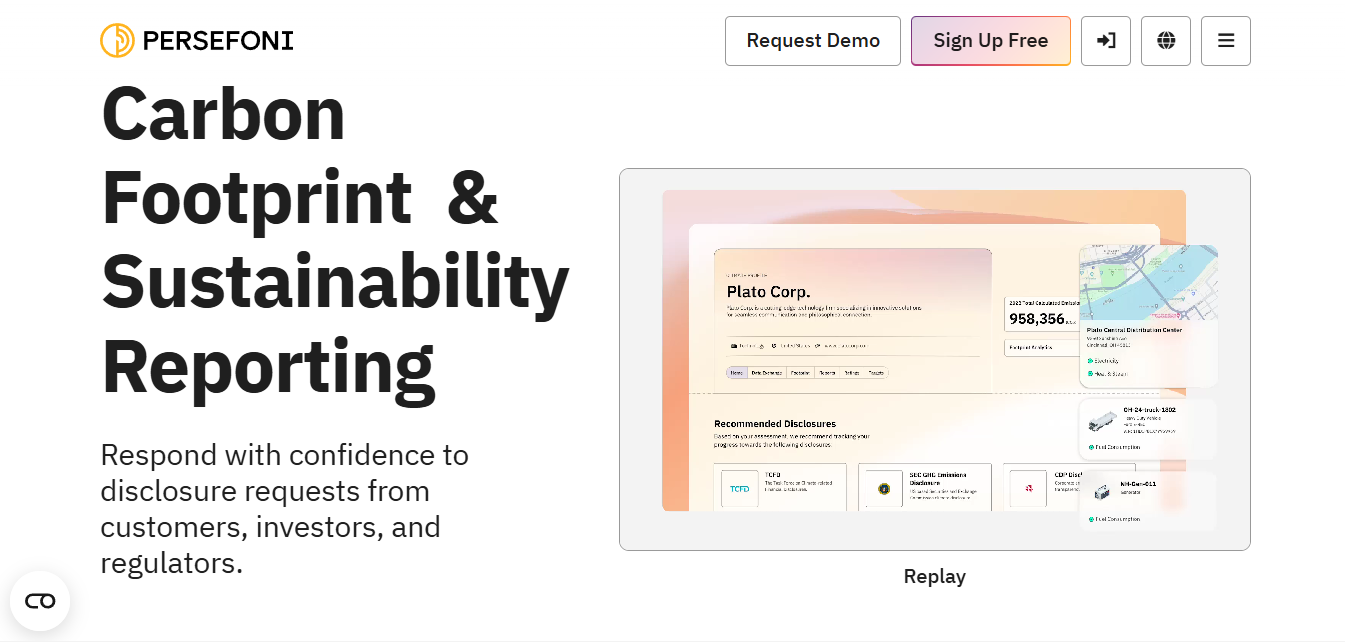
Founded in 2020 and backed by nearly $180 million in funding, Persefoni has established itself as the sustainability reporting software of choice for organizations where emissions data needs to operate with the same governance, traceability, and audit confidence as financial statements.
Banks, insurers, asset managers, and investment firms navigating the intersection of TCFD, PCAF, and CSRD obligations use it to quantify both operational and financed emissions in a single, finance-grade environment.
What makes Persefoni particularly relevant as sustainability reporting requirements tighten is its progressive data maturity model.
Rather than requiring organizations to have perfect primary data before they can begin reporting credibly, the platform lets teams start with available spend-based estimates and continuously refine toward supplier-specific and activity-level data as reporting capability develops.
Key Features
- Finance-grade sustainability reporting workflows: Links carbon accounting directly to governance, audit, and investor disclosure processes, helping organizations produce consistent, traceable sustainability data that meets the standards financial stakeholders and assurance providers demand.
- Scenario planning and pathway modeling: Models multiple emissions reduction strategies, helping organizations compare sustainability pathways, assess trade-offs, and align climate targets with evolving regulatory, investor, and operational expectations simultaneously.
- Spend-based to actuals progression: A structured data maturity journey that lets organizations begin sustainability reporting with available spend estimates and refine continuously toward supplier-specific and activity-level data as organizational capacity develops.
Testimonials
Customers on Capterra describe how Persefoni helped their organizations move away from fragmented, spreadsheet-based sustainability reporting toward a more structured and credible process. They highlight cleaner emissions calculations, better data organization, and a workflow that held up under assurance review in ways their previous approach never could.
Reviewers also point to the platform's specialist knowledge as a standout element of the engagement, describing how Persefoni's team helped them understand the right sustainability reporting methodology for their inventory. They also talk about how the software helped build stronger data collection habits, and improve the overall transparency of their climate disclosures over successive reporting cycles.
9. Watershed
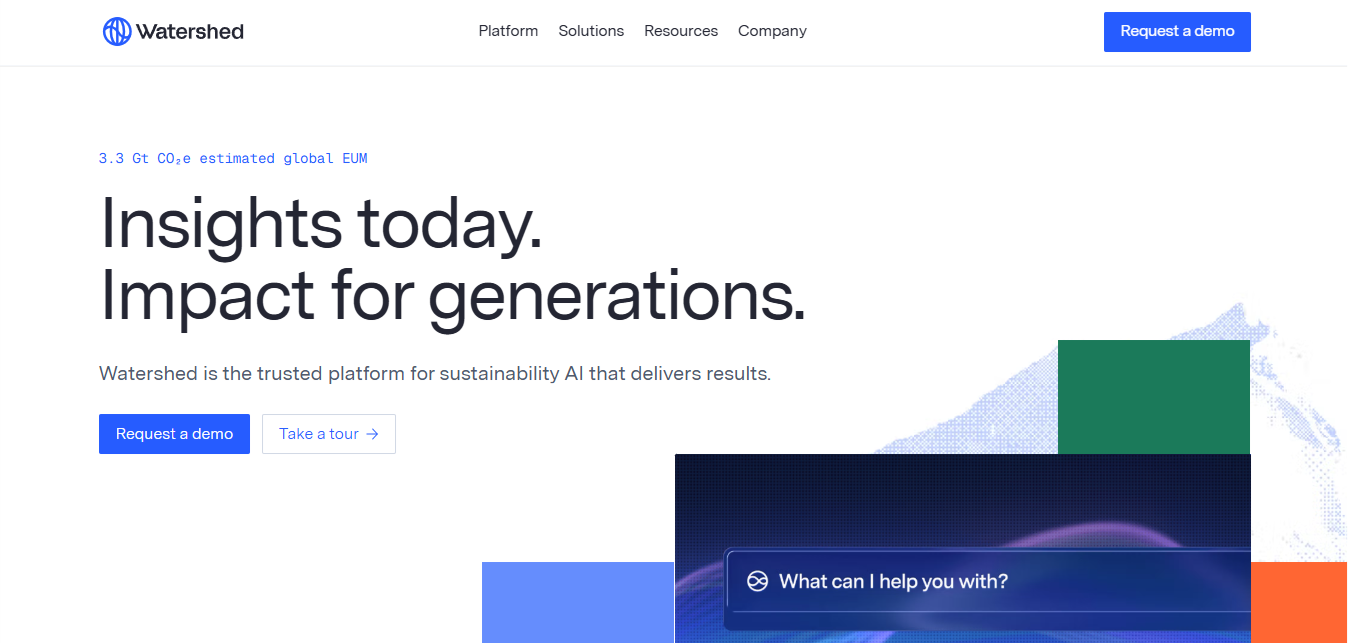
The majority of most organizations' emissions sit not in their own operations but across hundreds of suppliers, logistics partners, and value chain participants, each holding data in a different format, at a different level of granularity, and with a different understanding of what sustainability reporting actually requires from them.
Watershed approaches sustainability reporting software from that operational reality, building its platform around the data acquisition and supplier intelligence infrastructure that makes credible, supply-chain-inclusive sustainability disclosure genuinely achievable rather than aspirationally stated.
Founded in 2019 and headquartered in San Francisco, Watershed serves enterprises that have moved past the question of whether to report and are now focused on reporting with enough rigor to satisfy auditors, investors, and an increasingly demanding regulatory landscape.
Its AI agents accelerate data cleaning, emissions factor mapping, and report drafting, getting sustainability teams to actionable data up to 80% faster than manual approaches, according to the platform's own reporting.
Key Features
- AI-powered sustainability data processing: Purpose-built AI agents automate data cleaning, formatting, and emissions factor mapping across sustainability datasets, significantly accelerating the preparation process and reducing the manual reconciliation burden on reporting teams.
- Audit-ready emissions measurement: Granular Scope 1, 2, and 3 accounting backed by transparent data lineage and a library of 500,000+ emission factors, supporting sustainability figures credible enough to withstand external verification and multi-framework regulatory scrutiny.
- Supplier engagement workflows: Built-in portals, scorecards, and automated follow-up help organizations scale supplier outreach and collect the value-chain sustainability data needed for credible Scope 3 disclosure without manual chasing across email threads.
Testimonials
Enterprise reviewers on G2 describe how Watershed transformed their sustainability reporting process, cutting carbon footprinting timelines from several months down to weeks and removing the spreadsheet complexity that previously made emissions calculations both time-consuming and prone to error.
Reviewers on G2 also highlight how the platform significantly improved their audit readiness, providing a reliable and traceable sustainability reporting system that gave internal stakeholders far greater confidence in the emissions figures being disclosed and defended during assurance engagements.
10. SINAI
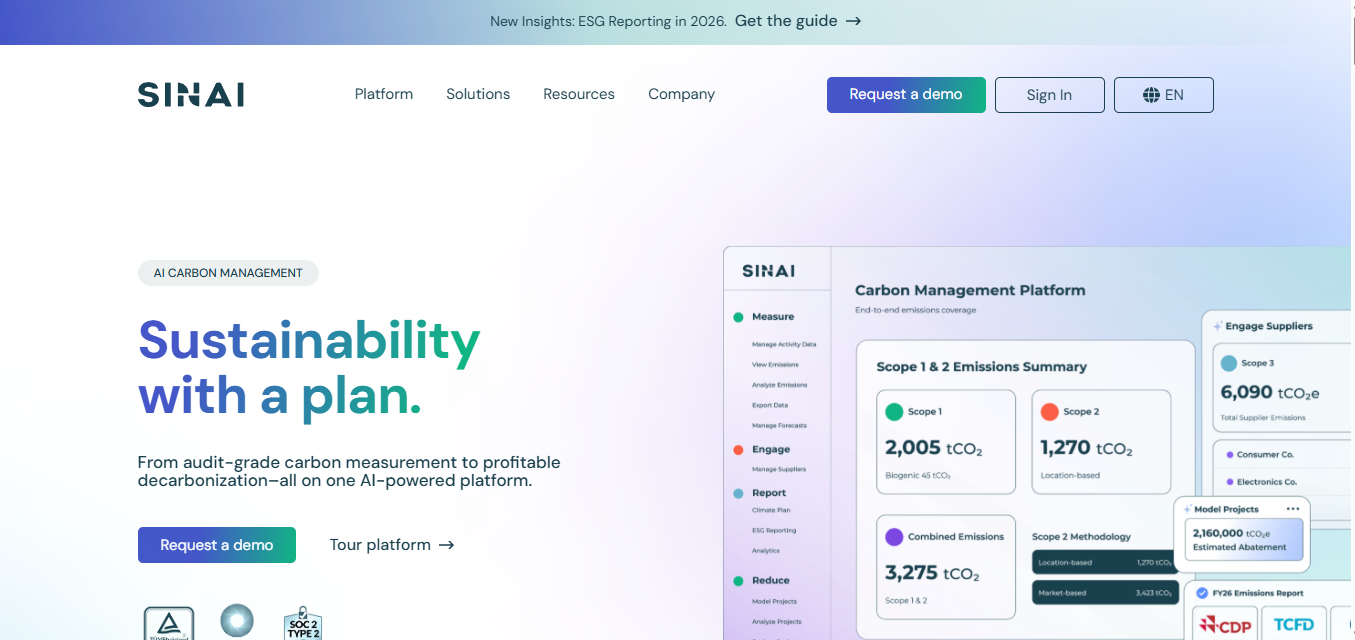
SINAI occupies the space where sustainability reporting software meets industrial operational reality. It was designed for organizations whose sustainability reporting challenges are inseparable from the financial and operational complexity of running large, carbon-intensive businesses.
What sets SINAI apart from the broader sustainability reporting market is its internal carbon pricing engine, a capability that assigns meaningful monetary values to emissions across business units, creating economic incentives for reduction that sit alongside the compliance incentives that drive most reporting programs.
For industrial organizations where decarbonization requires significant capital allocation decisions, that connection between sustainability reporting and financial planning is not a nice-to-have feature but a strategic necessity.
Its 40,000+ emission factor library and marginal abatement cost curve generation help organizations move beyond simply reporting what their emissions are toward understanding which reduction investments will deliver the strongest climate impact per dollar spent.
Key Features
- Integrated financial and sustainability modeling: Links emissions accounting directly to financial transition planning and marginal abatement cost curve generation, helping organizations build sustainability strategies that are both environmentally credible and economically justified.
- Large emission factor library for sustainability reporting: A library of 40,000+ emission factors enables rapid, accurate sustainability reporting across complex industrial emission categories and supplier relationships without waiting for every data point to be manually verified.
- AI Emissions Match for data processing: Automatically maps varied procurement, ERP, logistics, and accounts-payable uploads to relevant emissions factors and supplier information, significantly reducing the data formatting burden that typically slows industrial sustainability reporting cycles.
Testimonials
Organizations featured across SINAI's customer success stories describe how the platform transformed their sustainability reporting infrastructure, replacing manually updated spreadsheets with an automated, detail-rich emissions tracking environment where operational managers could access accurate data immediately after input and act on it without delay.
Teams working with SINAI also highlight how the platform created a foundation for cross-functional collaboration on sustainability reporting and decarbonization planning that had not existed before, bringing finance, operations, and sustainability functions into a shared data environment for the first time and enabling more informed, faster decision-making across the organization.

How To Choose The Right Sustainability Reporting Software
1. Map your regulatory obligations before evaluating any platform.
The starting point for any sustainability reporting software evaluation should not be a feature comparison. It should be a clear understanding of which frameworks and regulations your organization is currently subject to and which ones are coming. CSRD, BRSR, TCFD, GRI, ISSB, and SEC climate rules each impose different data requirements, disclosure structures, and assurance expectations.
A platform that handles GRI beautifully but has no native CSRD or ESRS support will create more work than it saves as regulatory obligations expand. Map your current and anticipated reporting landscape first, then evaluate platforms against it.
2. Treat data governance as a non-negotiable, not a premium feature.
As sustainability reporting moves toward mandatory external assurance, the audit trail behind every data point matters as much as the disclosure itself. The right sustainability reporting software should maintain full data lineage, version control, and approval workflows as standard, not as features locked behind higher pricing tiers.
Platforms like Pulsora and IBM Envizi are built around governance as a core architectural principle. For organizations that are already subject to limited assurance or expect to be soon, this is the capability that will determine whether a platform survives its first serious assurance engagement.
3. Evaluate Scope 3 capability with the same rigor as Scope 1 and 2.
For most organizations, Scope 3 emissions represent the largest and most complex portion of their sustainability reporting obligation, and the area where data quality most commonly falls short. Before selecting a platform, assess how it handles supplier engagement, primary data collection, and spend-based estimation.
Does it have built-in supplier survey workflows? Does it connect to supplier data networks like Carbon Network or EcoVadis? A sustainability reporting software platform that treats Scope 3 as an afterthought will create persistent gaps in disclosure quality that become harder to close as assurance requirements tighten.
4. Consider the balance between software and expert support.
Not every organization has the internal sustainability expertise to configure a platform, interpret methodology questions, and produce a credible disclosure independently.
Platforms like Breathe ESG, Normative, and Plan A embed expert advisory support into the engagement by design, giving sustainability teams access to strategic and methodological guidance as part of the standard relationship rather than a separately scoped consulting engagement.
For teams that are earlier in their reporting journey or managing disclosure obligations with limited internal resources, that combination of technology and human expertise can be the difference between a disclosure that gets filed and one that gets filed confidently.
5. Think beyond this year's reporting cycle.
The sustainability reporting software platform you select today needs to grow with your program over the next three to five years. Regulatory frameworks will expand. Assurance requirements will tighten. Data quality expectations will increase. Scope 3 coverage will need to deepen.
Choose a platform that supports progressive improvement in data maturity, accommodates new entities as they come into scope, and has a credible product roadmap that keeps pace with how the sustainability reporting landscape is evolving — not just one that handles your current obligations at the lowest possible cost.

Simplify Sustainability Reporting With Breathe ESG
Every platform on this list addresses a meaningful part of the sustainability reporting challenge. Some excel at supply chain data collection, others at finance-grade governance, others at European regulatory alignment or industrial transition planning.
The right choice will always depend on where your organization sits today, in terms of size, regulatory obligations, data maturity, and internal sustainability capacity.
What makes Breathe ESG stand out is how much of that stack it brings together in one connected, accessible environment.
It is not a platform built solely for disclosure, it is a sustainability reporting software solution that connects data collection, emissions accounting, multi-framework reporting, and active reduction planning into a single workflow that organizations can run repeatedly, improve progressively, and trust when regulators and assurance providers ask hard questions about the numbers behind the disclosure.
For sustainability teams that want reporting to be the beginning of a credible climate program rather than the end of an annual scramble, Breathe ESG is the platform that makes that possible.
Book a discovery call today and find out how Breathe ESG can transform your sustainability reporting program from the ground up.
FAQs
What is sustainability reporting software?
Sustainability reporting software is a digital platform that helps organizations collect, manage, and disclose environmental, social, and governance data. It automates data collection, applies recognized frameworks like GRI and CSRD, and produces audit-ready outputs for regulators, investors, and stakeholders.
What are the key sustainability reporting frameworks organizations need to follow?
The most widely used sustainability reporting frameworks include GRI, CSRD, TCFD, ISSB, BRSR, and CDP. Each framework has specific disclosure requirements, and most organizations operating across multiple jurisdictions need their reporting software to support several of these simultaneously.
How does sustainability reporting software support ESG compliance?
Sustainability reporting software centralizes ESG data, applies recognized calculation methodologies, maps outputs to relevant regulatory frameworks, and maintains the audit trails that compliance and assurance engagements require. It transforms what was once a manual, error-prone process into a structured, repeatable, and defensible reporting program.
What is the best sustainability reporting software for businesses in 2026?
Breathe ESG is one of the strongest options available, combining automated Scope 1, 2, and 3 data collection, multi-framework reporting across GRI, CSRD, BRSR, and TCFD, and real-time ESG dashboards in a single platform that is both enterprise-capable and accessible for growing organizations.

